
Product Category
-
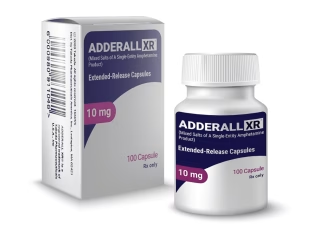 Buy Adderall Online
 -
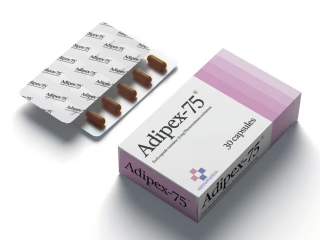 Buy Adipex Online
 -
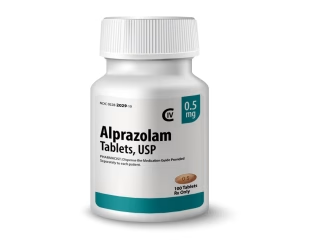 Buy Alprazolam Online
 -
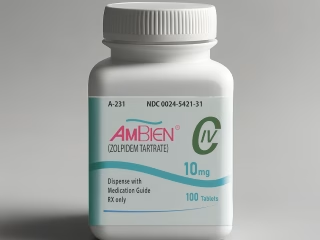 Buy Ambien Online
 -
 Buy Ativan Online
 -
 Buy Belbien Online
 -
 Buy Buprenorphine Online
 -
 Buy Butalbital Online
 -
 Buy Cialis Online
 -
 Buy Claritin Online
 -
 Buy Clonazepam Online
 -
 Buy Codeine Online
 -
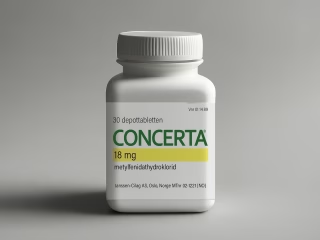 Buy Concerta Online
 -
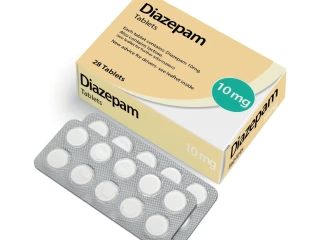 Buy Diazepam Online
 -
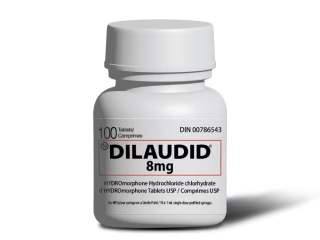 Buy Dilaudid Online
 -
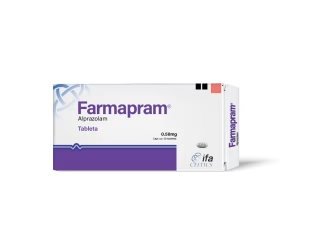 Buy Farmapram Online
 -
 Buy Fioricet Online
 -
 Buy Gabapentin Online
 -
 Buy Hydrocodone Online
 -
 Buy Hydromorphone Online
 -
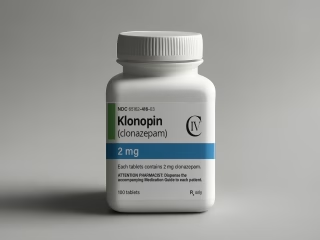 Buy Klonopin Online
 -
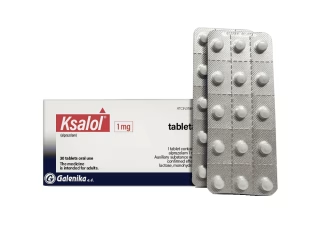 Buy Ksalol Online
 -
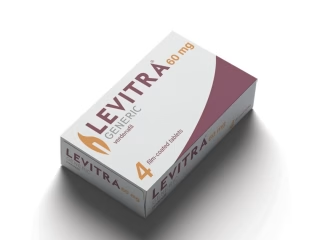 Buy Levitra Online
 -
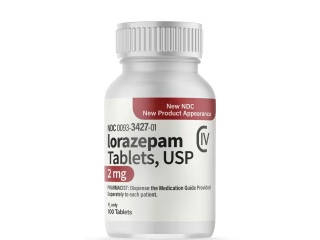 Buy Lorazepam Online
 -
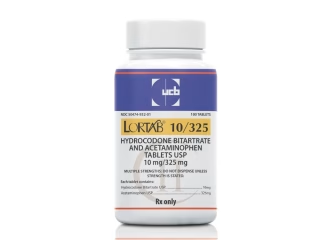 Buy Lortab Online
 -
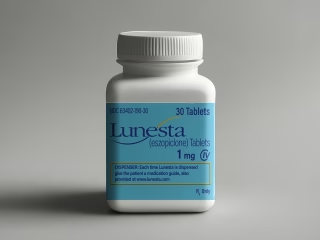 Buy Lunesta Online
 -
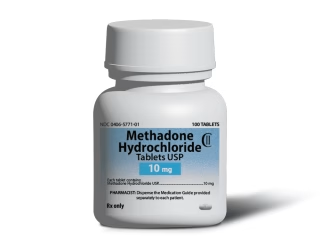 Buy Methadone Online
 -
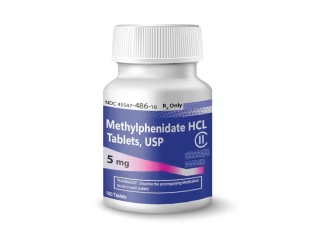 Buy Methylphenidate Online
 -
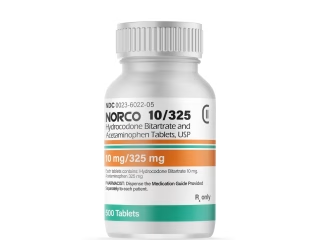 Buy Norco Online
 -
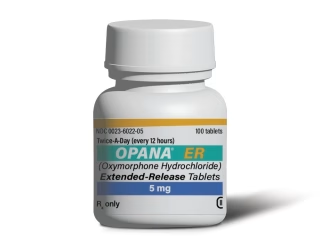 Buy Opana ER Online
 -
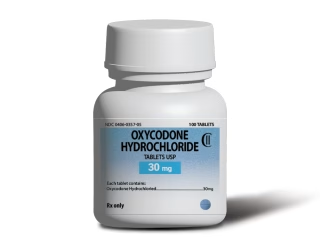 Buy Oxycodone Online
 -
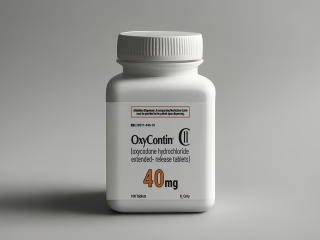 Buy Oxycontin Online
 -
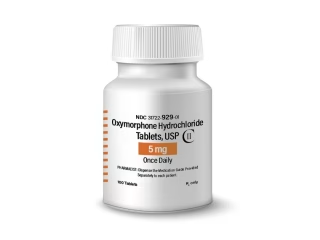 Buy Oxymorphone Online
 -
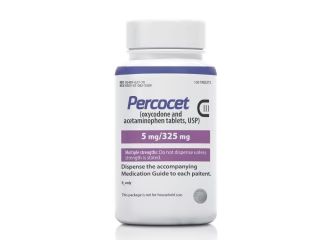 Buy Percocet Online
 -
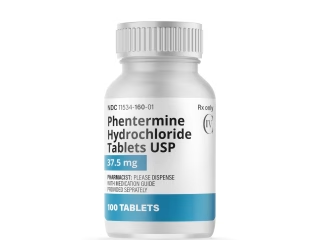 Buy Phentermine Online
 -
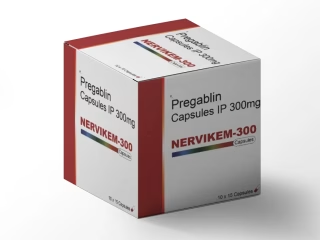 Buy Pregabalin Online
 -
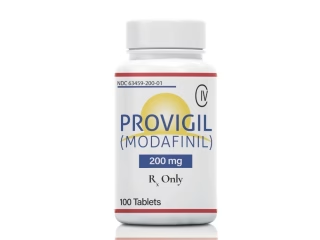 Buy Provigil Online
 -
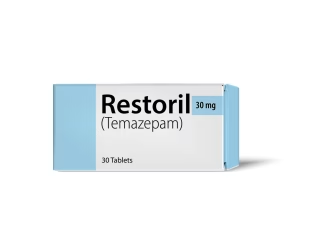 Buy Restoril Online
 -
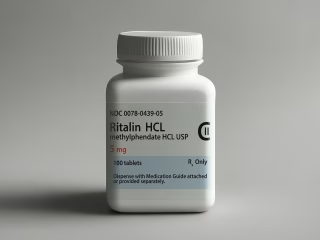 Buy Ritalin Online
 -
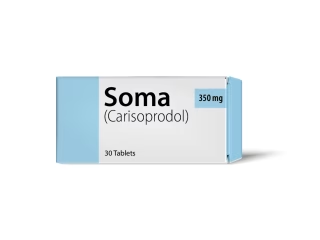 Buy Soma Online
 -
 Buy Suboxone Online
 -
 Buy Tapentadol Online
 -
 Buy Tramadol Online
 -
 Buy Valium Online
 -
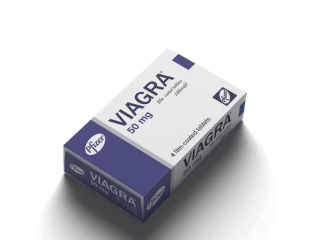 Buy Viagra Online
 -
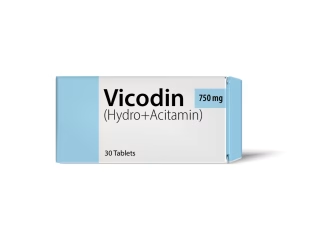 Buy Vicodin Online
 -
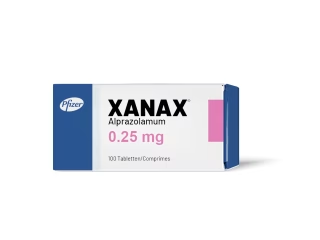 Buy Xanax Online
 -
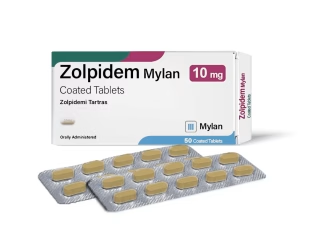 Buy Zolpidem Online
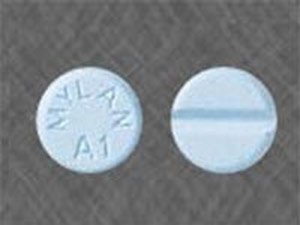
Alprazolam 1mg
$317.00
| 60 Pills | $317.00 | |
| 120 Pills | $417.00 | |
| 180 Pills | $517.00 | |
| 240 Pills | $617.00 | |
| 300 Pills | $712.00 |
What Is Alprazolam 1 mg?
Alprazolam 1 mg is a mid-to-high strength immediate-release tablet of alprazolam, a benzodiazepine used to treat anxiety and panic disorders. It is a central nervous system (CNS) depressant classified as a Schedule IV controlled substance in the United States because it can be abused or lead to dependence.
The 1 mg strength is a commonly prescribed maintenance dose for generalized anxiety disorder and a standard titration step for panic disorder. It allows prescribers to optimize treatment between the 0.5 mg starting dose and the 2 mg maximum-strength tablet.
What Alprazolam 1 mg Is Prescribed For
Alprazolam is FDA-approved for two conditions:
- Generalized Anxiety Disorder (GAD): For the acute treatment of generalized anxiety disorder in adults.
- Panic Disorder: For the treatment of panic disorder, with or without agoraphobia, in adults.
Important limitation: The effectiveness of alprazolam for long-term use (more than 4 months for anxiety disorder and more than 10 weeks for panic disorder) has not been established in systematic clinical studies. Physicians should periodically reassess the usefulness of the drug for the individual patient.
Active Ingredients
The active ingredient in alprazolam 1 mg is alprazolam, a triazolobenzodiazepine.
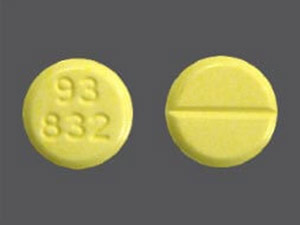
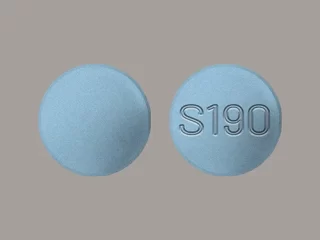
The 1 mg tablet is typically described as blue, oval, and scored. Common imprints include “S 902” or “GG 258” depending on the manufacturer.
Available Strengths
Alprazolam immediate-release tablets are available in the following strengths:
Strength Typical Appearance Typical Use 0.25 mg White, oval, scored Starting dose; elderly or sensitive patients 0.5 mg Peach, oval, scored Standard starting dose for adults 1 mg Blue, oval, scored Maintenance therapy 2 mg White, rectangular, multi-scored Higher-dose therapy; panic disorder
Dosage Guidelines
Generalized Anxiety Disorder: The recommended starting oral dosage is 0.25 mg to 0.5 mg administered three times daily. Depending upon the response, the dosage may be adjusted at intervals of every 3 to 4 days. The maximum recommended dosage is 4 mg daily (in divided doses).
Panic Disorder: The recommended starting oral dosage is 0.5 mg three times daily. Depending on the response, the dosage may be increased at intervals of every 3 to 4 days in increments of no more than 1 mg per day. Controlled trials included dosages in the range of 1 mg to 10 mg daily, with a mean dosage of approximately 5 mg to 6 mg daily.
Tapering: When discontinuing alprazolam, decrease the dosage by no more than 0.5 mg every 3 days. Some patients may require an even slower dosage reduction.
Important Safety Information (Boxed Warning)
Risks from Concomitant Use with Opioids: Concomitant use of benzodiazepines, including alprazolam, and opioids may result in profound sedation, respiratory depression, coma, and death. Reserve concomitant prescribing of these drugs for patients for whom alternative treatment options are inadequate. If a decision is made to prescribe alprazolam concomitantly with opioids, prescribe the lowest effective dosages and minimum durations of concomitant use, and follow patients closely for signs and symptoms of respiratory depression and sedation.
Abuse, Misuse, and Addiction: The use of benzodiazepines, including alprazolam, exposes users to risks of abuse, misuse, and addiction, which can lead to overdose or death. Abuse and misuse of benzodiazepines often involve the use of doses greater than the maximum recommended dosage and commonly involve concomitant use of other medications, alcohol, and/or illicit substances. Before prescribing alprazolam and throughout treatment, assess each patient’s risk for abuse, misuse, and addiction.
Physical Dependence and Withdrawal Reactions: Alprazolam can cause physical dependence and withdrawal reactions. Abrupt discontinuation or rapid dosage reduction after continued use may precipitate acute withdrawal reactions, which can be life-threatening (e.g., seizures). The risk of seizure seems to be greatest 24–72 hours after discontinuation. To reduce the risk of withdrawal reactions, use a gradual taper to discontinue alprazolam or reduce the dosage.
Do not stop taking alprazolam suddenly. A gradual dosage tapering schedule is required.
Common Side Effects
Anxiety disorder patients: The most common side effects include drowsiness (41% vs 21.6% placebo), light-headedness, dizziness, fatigue, and impaired coordination.
Panic disorder patients: Side effects may include drowsiness, fatigue, impaired coordination, memory impairment, and speech disorders (dysarthria).
Note: In controlled clinical trials, approximately 17% of panic disorder patients receiving alprazolam XR discontinued treatment due to adverse events, compared to 8% of placebo-treated patients.
Important Warnings
CNS Depression and Impaired Performance: Because alprazolam has CNS depressant effects and has the potential to impair judgment, cognition, and motor performance, patients should be cautioned against engaging in hazardous occupations or activities requiring complete mental alertness such as operating machinery or driving a motor vehicle, until they are reasonably certain that alprazolam treatment does not affect them adversely. Alcohol should generally not be used during treatment with benzodiazepines.
Risk of Fetal Harm: Benzodiazepines can potentially cause fetal harm when administered to pregnant women. Alprazolam is in Pregnancy Category D. If alprazolam is used during pregnancy, or if the patient becomes pregnant while taking this drug, the patient should be apprised of the potential hazard to the fetus. Use during the first trimester should almost always be avoided.
Neonatal Sedation and Withdrawal Syndrome: Alprazolam use during pregnancy can result in neonatal sedation (respiratory depression, lethargy, hypotonia) and/or withdrawal symptoms (hyperreflexia, irritability, restlessness, tremors, inconsolable crying, feeding difficulties).
Mania: Episodes of hypomania and mania have been reported in association with the use of alprazolam in patients with depression.
Use in Elderly Patients: The elderly exhibit higher plasma concentrations due to reduced clearance. A mean half-life of alprazolam of 16.3 hours has been observed in healthy elderly subjects compared to 11.0 hours in healthy adult subjects. The dosage should be limited to the smallest effective dose to preclude the development of ataxia or oversedation.
Drug Interactions
Potent CYP3A Inhibitors (Contraindicated): Azole antifungal agents including ketoconazole and itraconazole are potent CYP3A inhibitors. Coadministration with alprazolam is contraindicated. Ketoconazole increases plasma alprazolam concentrations 3.98 fold, and itraconazole increases them 2.70 fold.
CYP3A Inhibitors (Caution and Dose Reduction Recommended): The following drugs have been demonstrated to inhibit alprazolam metabolism:
- Nefazodone — increased alprazolam concentration 1.98 fold
- Fluvoxamine — increased alprazolam concentration 1.96 fold
- Erythromycin — increased alprazolam concentration 1.61 fold
CYP3A Inducers: Carbamazepine can increase alprazolam metabolism and therefore decrease plasma levels of alprazolam. The oral clearance was increased from 0.90 to 2.13 mL/min/kg, and the elimination half-life was shortened from 17.1 to 7.7 hours.
Who Should Not Take Alprazolam 1 mg
Alprazolam is contraindicated in patients with:
- Known hypersensitivity to alprazolam or other benzodiazepines. Angioedema has been reported.
- Concomitant use with strong cytochrome P450 3A (CYP3A) inhibitors (e.g., ketoconazole, itraconazole), except ritonavir.
How Prescriptions Work
As a Schedule IV controlled substance, alprazolam 1 mg prescriptions are subject to federal and state regulations:
- Refills: Schedule IV prescriptions may be refilled up to 5 times within 6 months from the date written, unless otherwise restricted by state law.
- Regular follow-up: Patients should have regular follow-up visits to reassess the continued need for treatment.
- Lowest effective dose: Prescribers should individualize dosage and use the lowest effective dose, particularly in elderly patients.
- Tapering required: Discontinuation should be gradual. Decrease the daily dosage by no more than 0.5 mg every three days, though some patients may benefit from an even slower reduction.
- Safe storage: Keep alprazolam in a safe place to prevent misuse and abuse. Selling or giving away alprazolam may harm others and is against the law. Store at room temperature in a dry place.
Frequently Asked Questions
Is alprazolam 1 mg safe for long-term use?
The effectiveness of alprazolam for long-term use (more than 4 months for anxiety disorder and more than 10 weeks for panic disorder) has not been established. Physicians should periodically reassess the usefulness of the drug for the individual patient.
Does alprazolam 1 mg affect sleep?
Drowsiness and fatigue are common side effects. Taking the medication as prescribed and avoiding alcohol can help minimize impairment.
Can I stop taking alprazolam 1 mg suddenly?
No. Abrupt discontinuation can cause serious and life-threatening side effects including seizures. A gradual taper under medical supervision is required.
What does “1 mg” mean in alprazolam 1 mg?
The 1 mg refers to the amount of alprazolam active ingredient in each tablet. It is a mid-to-high strength immediate-release formulation.
Is alprazolam 1 mg the same as Xanax 1 mg?
Yes. Alprazolam is the generic name for the active ingredient in Xanax. Alprazolam 1 mg is the generic equivalent of Xanax 1 mg.
Can alprazolam 1 mg be split?
The 1 mg tablet is typically scored, which may allow splitting. However, patients should only split tablets if instructed by their prescriber, as accurate dosing cannot always be guaranteed.
What is the difference between alprazolam 1 mg and alprazolam 0.5 mg?
Alprazolam 1 mg is one titration step higher than 0.5 mg. It is commonly used as a maintenance dose once the patient has been stabilized on a lower strength.
Conclusion
Alprazolam 1 mg is a mid-to-high strength immediate-release benzodiazepine approved for generalized anxiety disorder and panic disorder. As a Schedule IV controlled substance, it carries a boxed warning for risks when combined with opioids, abuse and addiction potential, and life-threatening withdrawal reactions. Common side effects include drowsiness, dizziness, and impaired coordination. Serious risks include respiratory depression when combined with CNS depressants, physical dependence, and seizures upon abrupt discontinuation. The 1 mg strength is a common maintenance dose that should be used at the lowest effective dose for the shortest duration necessary. Patients should avoid alcohol, store the medication securely, and never stop treatment suddenly without medical supervision.
3 reviews for Alprazolam 1mg
Related products
-
$307.00Select options This product has multiple variants. The options may be chosen on the product page
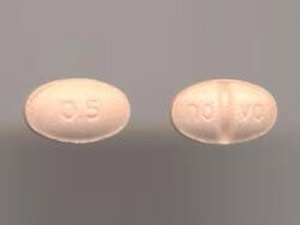
What Is Alprazolam 0.5 mg? Alprazolam 0.5 mg is a mid-strength immediate-release tablet of alprazolam, a benzodiazepine used to treat anxiety and panic disorders. It is a central nervous system (CNS) depressant classified as a Schedule IV controlled substance in the United States because it can be abused or lead to dependence. The 0.5 mg …
-
$307.00Select options This product has multiple variants. The options may be chosen on the product page
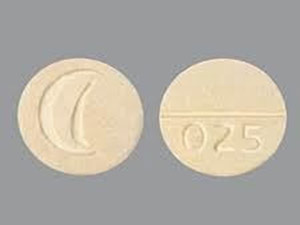
What Is Alprazolam 0.25 mg? Alprazolam 0.25 mg is the lowest available strength of the immediate-release tablet formulation of alprazolam, a benzodiazepine used to treat anxiety and panic disorders. It is a central nervous system (CNS) depressant classified as a Schedule IV controlled substance in the United States because it can be abused or lead …
-
$327.00Select options This product has multiple variants. The options may be chosen on the product page
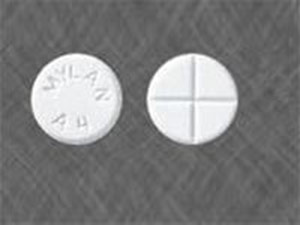
What Is Alprazolam 2 mg? Alprazolam 2 mg is the highest available strength of the immediate-release tablet formulation of alprazolam, a benzodiazepine used to treat anxiety and panic disorders. It is a central nervous system (CNS) depressant classified as a Schedule IV controlled substance in the United States because it can be abused or lead …
Rupert Mejia
I was a bit skeptical about ordering medication online, but this site exceeded my expectations. The medication works as it should, and the overnight shipping is a lifesaver. Highly satisfied.
Curtis Ward
The process was seamless! I got my prescription filled in no time, and the Alprazolam 1mg arrived in perfect condition. Great customer service too—they’re always available to assist.
Vernon Freeman
Finally found a pharmacy I can trust! The quality of the Alprazolam 1mg is spot-on, and the quick shipping is incredibly convenient. I’ll definitely be a repeat customer.