
ADHD and Insomnia: Why Your Brain Won’t Let You Sleep

It is 2:00 AM. You have been lying in bed for hours. Your body is exhausted, but your mind is racing. You keep replaying conversations, planning tomorrow’s tasks, or jumping between random thoughts that make no sense.
If you have ADHD, this experience is probably familiar. Sleep problems are extremely common among adults with ADHD. In fact, research suggests that up to 70% of adults with ADHD struggle with sleep issues, including difficulty falling asleep, staying asleep, and waking up feeling rested.
This article explains why ADHD and insomnia are so closely connected, what makes sleep so difficult for people with ADHD, and what strategies can actually help.
Why ADHD Makes Sleep So Difficult
ADHD affects more than attention and focus. It influences the brain’s ability to regulate arousal, impulse control, and the sleep-wake cycle. Several factors contribute to sleep problems in people with ADHD.
A Brain That Will Not Slow Down
One of the most common complaints among adults with ADHD is a racing mind at bedtime. During the day, distractions and activities keep the brain occupied. At night, when everything is quiet, thoughts become louder.
This happens because the ADHD brain often operates with lower levels of dopamine, a neurotransmitter that regulates attention, motivation, and reward. When dopamine levels are low, the brain seeks stimulation. At bedtime, when there is nothing to focus on, the brain creates its own stimulation through thoughts, worries, and mental noise.
The result is a state of hyperarousal. You are physically tired, but your brain is wide awake. This is sometimes called the “tired but wired” feeling.
Delayed Circadian Rhythm
Many people with ADHD have a delayed circadian rhythm. This means their natural sleep-wake cycle runs later than average. They do not feel sleepy at 10:00 PM or 11:00 PM. Their body does not signal that it is time for rest until much later.
This condition is called Delayed Sleep Phase Syndrome (DSPS). It is common among people with ADHD. Someone with DSPS might feel most alert in the evening and struggle to wake up in the morning, even after a full night of sleep.
Time Blindness and Poor Sleep Habits
ADHD often involves difficulty with time perception. People with ADHD may lose track of time while watching television, scrolling on their phone, or working on a task. They may not notice that hours have passed.
This can lead to inconsistent sleep schedules. Going to bed at different times each night confuses the body’s internal clock. Over time, this makes it harder to fall asleep and wake up at consistent times.
Stimulant Medication and Sleep
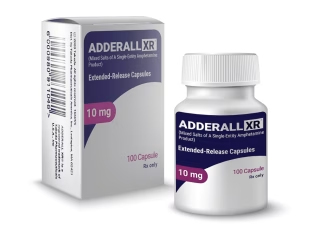
Many people with ADHD take stimulant medications such as Adderall. These medications are effective for managing ADHD symptoms during the day, but they can interfere with sleep if taken too late.
Stimulants increase alertness and can remain in the body for several hours. If medication is taken in the afternoon or evening, it may still be active at bedtime. This makes it difficult to fall asleep, even when the person feels tired.
It is important to note that not everyone experiences sleep problems from stimulant medication. Some people actually sleep better when their ADHD symptoms are well-managed. However, for others, timing and dosage adjustments are necessary.
The Cycle of ADHD, Anxiety, and Insomnia
ADHD, anxiety, and insomnia often occur together. Each condition can make the others worse.
Anxiety About Not Sleeping
When someone with ADHD has repeated nights of poor sleep, they may start to worry about sleep itself. As bedtime approaches, they think, “What if I cannot fall asleep again?” or “I will be useless tomorrow if I do not sleep.”
This anxiety triggers the body’s stress response. Cortisol and adrenaline are released. The brain becomes more alert. Sleep becomes even less likely.
This creates a cycle. Poor sleep leads to anxiety. Anxiety leads to worse sleep. The pattern repeats night after night.
The Impact of Poor Sleep on ADHD Symptoms
Sleep deprivation makes ADHD symptoms worse. Research shows that lack of sleep impairs attention, working memory, and emotional regulation. For someone with ADHD, this means:
- Increased difficulty focusing
- More impulsivity
- Heightened emotional reactions
- Worse decision-making
Poor sleep and ADHD symptoms feed each other. The worse the sleep, the worse the ADHD. The worse the ADHD, the harder it is to maintain good sleep habits.
How to Improve Sleep with ADHD
Improving sleep with ADHD requires addressing both the ADHD-related challenges and the sleep habits that have developed over time. The following strategies are evidence-based and practical.
- Establish a Consistent Sleep Schedule
Going to bed and waking up at the same time every day helps regulate the body’s internal clock. This is especially important for people with ADHD, who often struggle with routine.
Choose a bedtime and wake time that you can maintain seven days a week. Yes, even on weekends. Consistency is key. - Create a Wind-Down Routine

Product Category
-
 Buy Adderall Online
 -
 Buy Adipex Online
 -
 Buy Alprazolam Online
 -
 Buy Ambien Online
 -
 Buy Ativan Online
 -
 Buy Belbien Online
 -
 Buy Buprenorphine Online
 -
 Buy Butalbital Online
 -
 Buy Cialis Online
 -
 Buy Claritin Online
 -
 Buy Clonazepam Online
 -
 Buy Codeine Online
 -
 Buy Concerta Online
 -
 Buy Diazepam Online
 -
 Buy Dilaudid Online
 -
 Buy Farmapram Online
 -
 Buy Fioricet Online
 -
 Buy Gabapentin Online
 -
 Buy Hydrocodone Online
 -
 Buy Hydromorphone Online
 -
 Buy Klonopin Online
 -
 Buy Ksalol Online
 -
 Buy Levitra Online
 -
 Buy Lorazepam Online
 -
 Buy Lortab Online
 -
 Buy Lunesta Online
 -
 Buy Methadone Online
 -
 Buy Methylphenidate Online
 -
 Buy Norco Online
 -
 Buy Opana ER Online
 -
 Buy Oxycodone Online
 -
 Buy Oxycontin Online
 -
 Buy Oxymorphone Online
 -
 Buy Percocet Online
 -
 Buy Phentermine Online
 -
 Buy Pregabalin Online
 -
 Buy Provigil Online
 -
 Buy Restoril Online
 -
 Buy Ritalin Online
 -
 Buy Soma Online
 -
 Buy Suboxone Online
 -
 Buy Tapentadol Online
 -
 Buy Tramadol Online
 -
 Buy Valium Online
 -
 Buy Viagra Online
 -
 Buy Vicodin Online
 -
 Buy Xanax Online
 -
 Buy Zolpidem Online
Recent Products
-
 Hydromorphone 2mg
$357.00
Hydromorphone 2mg
$357.00
-
 Alprazolam 1mg
$317.00
Alprazolam 1mg
$317.00
-
 Dilaudid 2mg
$309.00
Dilaudid 2mg
$309.00
-
 Diazepam 2mg
$307.00
Diazepam 2mg
$307.00
-
 Methadone 10mg
$311.00
Methadone 10mg
$311.00





Leave a Reply
You must be logged in to post a comment. Login here