
Product Category
-
 Buy Adderall Online
 -
 Buy Adipex Online
 -
 Buy Alprazolam Online
 -
 Buy Ambien Online
 -
 Buy Ativan Online
 -
 Buy Belbien Online
 -
 Buy Buprenorphine Online
 -
 Buy Butalbital Online
 -
 Buy Cialis Online
 -
 Buy Claritin Online
 -
 Buy Clonazepam Online
 -
 Buy Codeine Online
 -
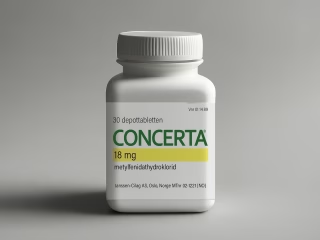 Buy Concerta Online
 -
 Buy Diazepam Online
 -
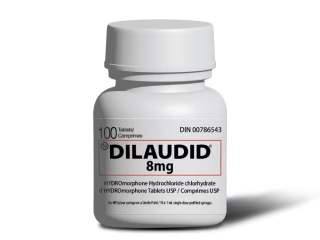 Buy Dilaudid Online
 -
 Buy Farmapram Online
 -
 Buy Fioricet Online
 -
 Buy Gabapentin Online
 -
 Buy Hydrocodone Online
 -
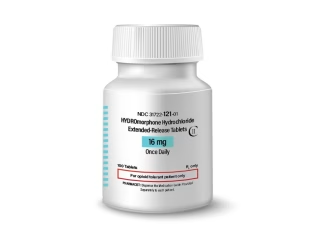 Buy Hydromorphone Online
 -
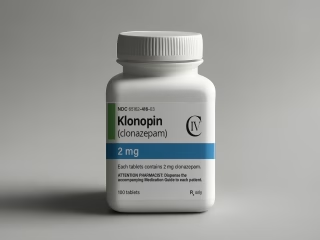 Buy Klonopin Online
 -
 Buy Ksalol Online
 -
 Buy Levitra Online
 -
 Buy Lorazepam Online
 -
 Buy Lortab Online
 -
 Buy Lunesta Online
 -
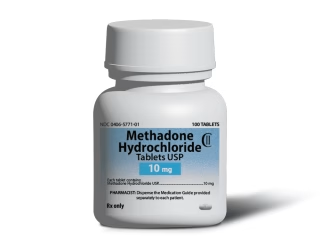 Buy Methadone Online
 -
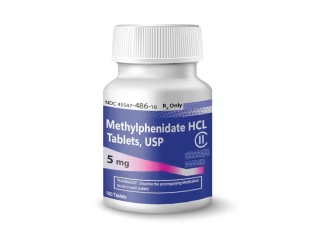 Buy Methylphenidate Online
 -
 Buy Norco Online
 -
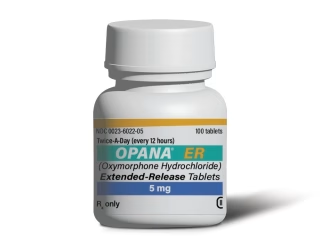 Buy Opana ER Online
 -
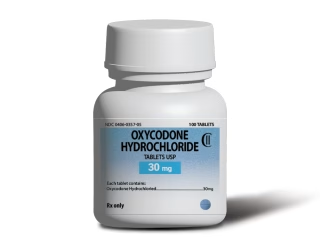 Buy Oxycodone Online
 -
 Buy Oxycontin Online
 -
 Buy Oxymorphone Online
 -
 Buy Percocet Online
 -
 Buy Phentermine Online
 -
 Buy Pregabalin Online
 -
 Buy Provigil Online
 -
 Buy Restoril Online
 -
 Buy Ritalin Online
 -
 Buy Soma Online
 -
 Buy Suboxone Online
 -
 Buy Tapentadol Online
 -
 Buy Tramadol Online
 -
 Buy Valium Online
 -
 Buy Viagra Online
 -
 Buy Vicodin Online
 -
 Buy Xanax Online
 -
 Buy Zolpidem Online

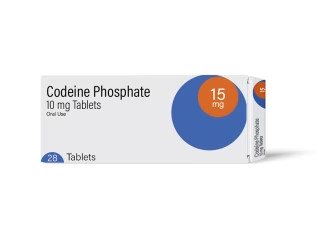
Codeine 15mg
$337.00
| 60 Pills | $337.00 | |
| 120 Pills | $407.00 | |
| 180 Pills | $507.00 | |
| 240 Pills | $617.00 | |
| 300 Pills | $757.00 |
What Is Codeine 15 mg?
Codeine 15 mg is the lowest available strength of codeine sulfate immediate-release tablets, an opioid analgesic used to treat mild to moderate pain. It is a Schedule II controlled substance in the United States, the most restrictive category, because it can be abused or lead to dependence.
Codeine is a prodrug, meaning it must be converted by the liver enzyme CYP2D6 into its active form, morphine, to produce pain relief. This metabolic conversion varies widely between individuals due to genetic differences, which has significant safety implications.
What Codeine 15 mg Is Prescribed For
Codeine sulfate tablets are FDA-approved for one primary indication:
- Management of mild to moderate pain where treatment with an opioid is appropriate and for which alternative treatments are inadequate.
Important limitation: Codeine is not a first-line treatment for pain. It should be used only when non-opioid options have been inadequate, and at the lowest effective dose for the shortest duration necessary.
Active Ingredients
The active ingredient is codeine sulfate, an opioid agonist that binds to mu-opioid receptors in the central nervous system.
Available strengths: Codeine sulfate tablets are available in 15 mg, 30 mg, and 60 mg strengths.
Administration note: Adult doses of codeine higher than 60 mg fail to give commensurate relief of pain and are associated with an appreciably increased incidence of undesirable side effects.
Dosage Guidelines
Standard Adult Dosing: The recommended initial dose is 15 to 60 mg every 4 hours as needed for pain, at the lowest dose necessary to achieve adequate analgesia. The dose should be titrated based on individual patient response.
Key principle: It is safer to underestimate a patient’s 24-hour dose than to overestimate it, because overestimation can result in fatal overdose with the first dose.
Discontinuation: Do not rapidly reduce or abruptly discontinue codeine in a physically-dependent patient. Rapid discontinuation can result in serious withdrawal symptoms, uncontrolled pain, and suicide.
Important Safety Information (Boxed Warning)
Death Related to Ultra-Rapid Metabolism of Codeine to Morphine: Respiratory depression and death have occurred in children who received codeine following tonsillectomy and/or adenoidectomy and had evidence of being ultra-rapid metabolizers of codeine due to a CYP2D6 polymorphism. Deaths have also occurred in nursing infants exposed to high levels of morphine in breast milk because their mothers were ultra-rapid metabolizers.
Prevalence of Ultra-Rapid Metabolism: This phenotype varies widely and has been estimated at 0.5 to 1% in Chinese and Japanese, 0.5 to 1% in Hispanics, 1 to 10% in Caucasians, 3% in African Americans, and 16 to 28% in North Africans, Ethiopians, and Arabs.
Addiction, Abuse, and Misuse: Codeine exposes patients to risks of opioid addiction, abuse, and misuse, which can lead to overdose and death. Assess each patient’s risk before prescribing and monitor regularly.
Life-Threatening Respiratory Depression: Serious, life-threatening, or fatal respiratory depression may occur, especially during initiation or following a dose increase. Monitor closely, particularly within the first 24 to 72 hours of starting therapy.
Accidental Ingestion: Accidental ingestion of even one dose, especially by children, can result in a fatal overdose of codeine.
Neonatal Opioid Withdrawal Syndrome: Prolonged use during pregnancy can result in withdrawal in the neonate, which may be life-threatening if not recognized and treated.
Common Side Effects
The most common adverse reactions include:
- Drowsiness
- Lightheadedness
- Dizziness
- Sedation
- Shortness of breath
- Nausea
- Vomiting
- Sweating
Important Warnings
Respiratory Depression: Respiratory depression is the primary risk of codeine. It occurs more frequently in elderly or debilitated patients and in those with conditions accompanied by hypoxia, hypercapnia, or upper airway obstruction. Codeine produces dose-related respiratory depression.
Interactions with Benzodiazepines and Other CNS Depressants: Concomitant use of opioids with benzodiazepines or other CNS depressants, including alcohol, may result in profound sedation, respiratory depression, coma, and death.
Adrenal Insufficiency: Cases have been reported with opioid use, more often following greater than one month of use. Presentation may include nausea, vomiting, anorexia, fatigue, weakness, dizziness, and low blood pressure.
Severe Hypotension: Codeine may cause severe hypotension. Avoid use in patients with circulatory shock.
Increased Intracranial Pressure: Monitor for sedation and respiratory depression. Avoid use in patients with impaired consciousness or coma.
Seizures: Codeine may increase seizure frequency in patients with seizure disorders.
Drug Interactions
MAOIs (Monoamine Oxidase Inhibitors): Concurrent use or use within 14 days of stopping an MAOI is contraindicated. Risk of hypotension, hyperpyrexia, somnolence, or death.
CNS Depressants (benzodiazepines, alcohol, sedatives): Additive CNS depression. Reserve concomitant prescribing for patients with no alternative options. Limit dosages and durations to the minimum required.
Serotonergic Drugs: Concomitant use may result in serotonin syndrome. Discontinue codeine if serotonin syndrome is suspected.
Mixed Agonist/Antagonist Opioids (buprenorphine, nalbuphine, pentazocine): May reduce analgesic effect or precipitate withdrawal symptoms.
CYP2D6 Inhibitors (fluoxetine, paroxetine, quinidine): May decrease conversion of codeine to morphine, reducing efficacy. After stopping a CYP2D6 inhibitor, morphine levels may increase, potentially causing fatal respiratory depression.
CYP3A4 Inducers (rifampin, carbamazepine): May decrease codeine levels and increase norcodeine levels, potentially reducing efficacy or causing withdrawal.
Who Should Not Take Codeine 15 mg
Codeine is contraindicated in:
- All children younger than 12 years of age
- Postoperative management in children younger than 18 years of age following tonsillectomy and/or adenoidectomy
- Significant respiratory depression
- Acute or severe bronchial asthma in an unmonitored setting or in absence of resuscitative equipment
- Concurrent use of MAOIs or use within the last 14 days
- Known or suspected gastrointestinal obstruction, including paralytic ileus
- Hypersensitivity to codeine
Explore More Product
How Prescriptions Work
As a Schedule II controlled substance, codeine 15 mg prescriptions are subject to strict federal and state regulations:
- Telemedicine: Under the Fourth Temporary Extension effective through December 31, 2026, DEA-registered practitioners may prescribe Schedule II-V controlled substances via telemedicine, but an initial in-person medical evaluation may be required for certain Schedule II medications.
- No refills: Federal law prohibits refills on Schedule II prescriptions. A new prescription is required each time.
- Tapering required: Discontinuation should be gradual. Rapid discontinuation in physically-dependent patients can cause serious withdrawal symptoms and uncontrolled pain.
- Safe storage: Keep codeine in a secure location out of reach of children. Never share it with others.
Frequently Asked Questions
Is codeine 15 mg safe for long-term use?
Codeine should be used at the lowest effective dose for the shortest duration necessary. Long-term use increases the risk of dependence, tolerance, and opioid-induced hyperalgesia.
Can I stop taking codeine 15 mg suddenly?
No. Abrupt discontinuation in a physically-dependent patient can cause serious withdrawal symptoms including anxiety, sweating, trouble sleeping, shaking, pain, nausea, tremors, diarrhea, and hallucinations. A gradual taper under medical supervision is required.
Can I drink alcohol while taking codeine?
No. Alcohol increases the risk of severe side effects from codeine, including decreased blood pressure, seizures, breathing problems, and severe drowsiness. The combination can be fatal.
What happens if I take too much codeine?
Seek emergency help immediately. Signs of overdose include extreme sleepiness, confusion, shallow breathing, pinpoint pupils, and clammy skin. Naloxone (Narcan) should be administered if available.
What is an ultra-rapid metabolizer?
Some individuals have a genetic variation (CYP2D6 polymorphism) that causes them to convert codeine to morphine more rapidly and completely. This can result in life-threatening or fatal respiratory depression even at labeled doses.
Is codeine safe during pregnancy?
Prolonged use during pregnancy can result in neonatal opioid withdrawal syndrome, which may be life-threatening if not recognized and treated. Use only if clearly needed and discuss risks with your healthcare provider.
How does codeine 15 mg compare to codeine 30 mg?
Codeine 30 mg is one titration step higher than 15 mg. The 15 mg strength is typically used as a starting dose or for patients who require less analgesia. The 60 mg strength is the maximum single dose, as higher doses do not provide commensurate pain relief and increase side effects.
Conclusion
Codeine 15 mg is the lowest-strength immediate-release opioid analgesic approved for mild to moderate pain. As a Schedule II controlled substance, it carries a boxed warning for death related to ultra-rapid metabolism of codeine to morphine, addiction, abuse, misuse, life-threatening respiratory depression, accidental ingestion, and neonatal opioid withdrawal syndrome. The most serious risk is the genetic variability in CYP2D6 metabolism—ultra-rapid metabolizers can experience fatal respiratory depression even at labeled doses, with prevalence ranging from 0.5% to 28% depending on ethnicity. Common side effects include drowsiness, dizziness, and nausea. Serious risks include respiratory depression when combined with CNS depressants, adrenal insufficiency, severe hypotension, and seizures. Codeine should be used at the lowest effective dose for the shortest duration necessary, never combined with alcohol or other CNS depressants, and never stopped abruptly in physically-dependent patients. Due to its controlled status, codeine requires a valid prescription and is subject to strict federal and state regulations.
1 review for Codeine 15mg
Related products
-
$367.00Select options This product has multiple variants. The options may be chosen on the product page

What Is Codeine 300/30 mg? Codeine 300/30 mg is a combination prescription analgesic containing acetaminophen 300 mg and codeine phosphate 30 mg per tablet. It is classified as a Schedule III controlled substance in the United States, meaning it has a recognized medical use but also a moderate-to-low potential for abuse and dependence. The “300/30” …
-
$417.00Select options This product has multiple variants. The options may be chosen on the product page

What Is Codeine 60 mg? Codeine 60 mg is the highest available strength of codeine sulfate immediate-release tablets, an opioid analgesic used to treat mild to moderately severe pain. It is a Schedule II controlled substance in the United States, the most restrictive category, because it can be abused or lead to dependence . The …
-
$337.00Select options This product has multiple variants. The options may be chosen on the product page

What Is Codeine 30 mg? Codeine 30 mg is a mid-strength immediate-release tablet of codeine sulfate, an opioid analgesic used to treat mild to moderately severe pain. It is a Schedule II controlled substance in the United States, the most restrictive category, because it can be abused or lead to dependence. The 30 mg strength …



Jodie Burch
Easy ordering process and the medicine arrived quickly. Highly recommend!