
Product Category
-
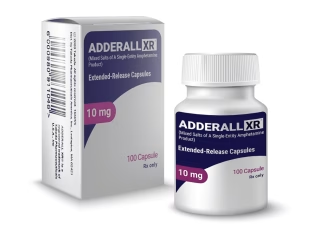 Buy Adderall Online
 -
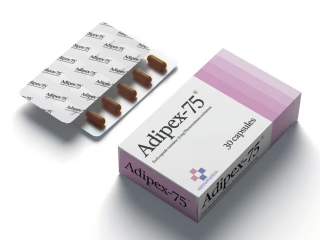 Buy Adipex Online
 -
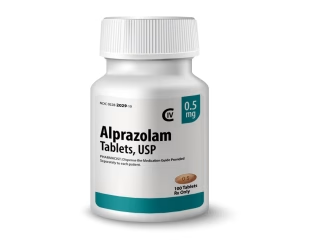 Buy Alprazolam Online
 -
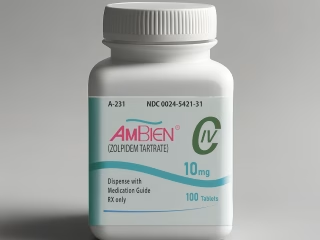 Buy Ambien Online
 -
 Buy Ativan Online
 -
 Buy Belbien Online
 -
 Buy Buprenorphine Online
 -
 Buy Butalbital Online
 -
 Buy Cialis Online
 -
 Buy Claritin Online
 -
 Buy Clonazepam Online
 -
 Buy Codeine Online
 -
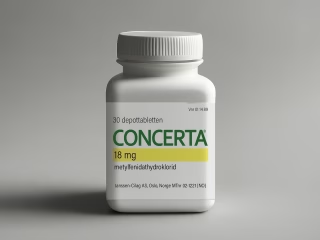 Buy Concerta Online
 -
 Buy Diazepam Online
 -
 Buy Dilaudid Online
 -
 Buy Farmapram Online
 -
 Buy Fioricet Online
 -
 Buy Gabapentin Online
 -
 Buy Hydrocodone Online
 -
 Buy Hydromorphone Online
 -
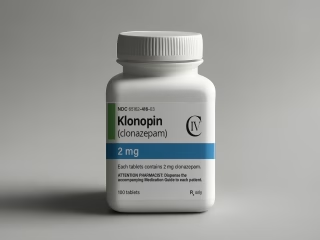 Buy Klonopin Online
 -
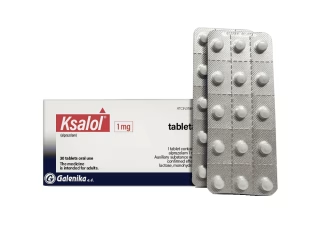 Buy Ksalol Online
 -
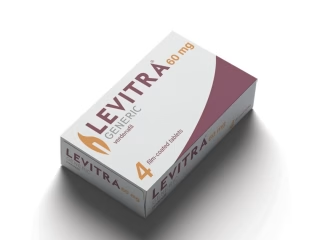 Buy Levitra Online
 -
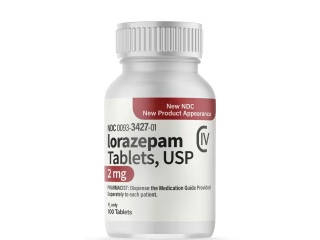 Buy Lorazepam Online
 -
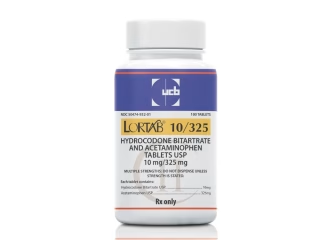 Buy Lortab Online
 -
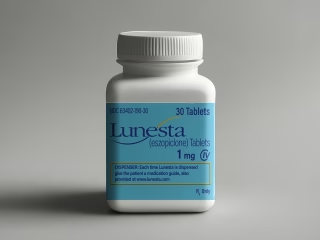 Buy Lunesta Online
 -
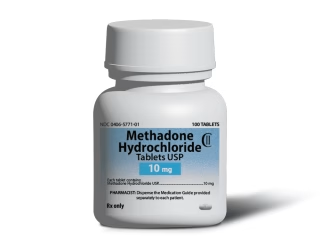 Buy Methadone Online
 -
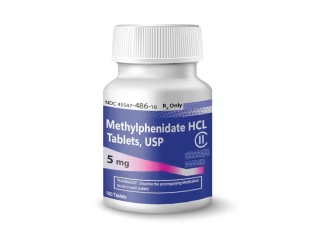 Buy Methylphenidate Online
 -
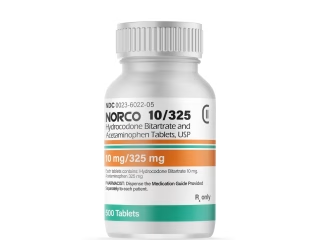 Buy Norco Online
 -
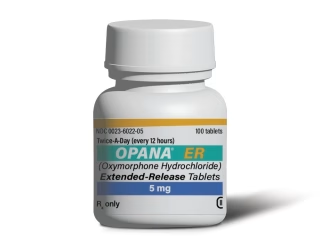 Buy Opana ER Online
 -
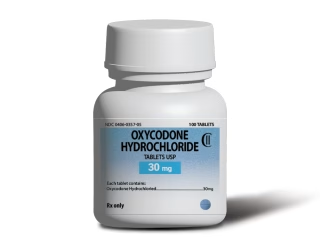 Buy Oxycodone Online
 -
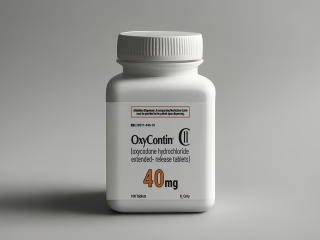 Buy Oxycontin Online
 -
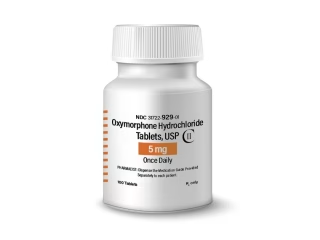 Buy Oxymorphone Online
 -
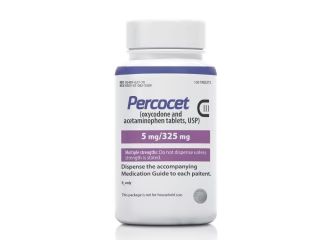 Buy Percocet Online
 -
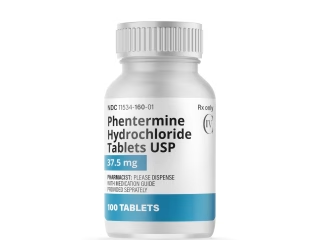 Buy Phentermine Online
 -
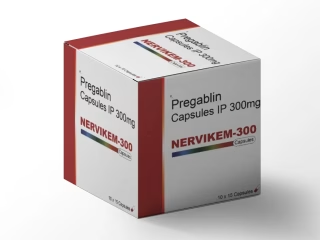 Buy Pregabalin Online
 -
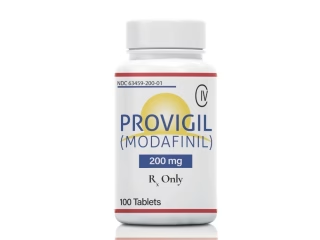 Buy Provigil Online
 -
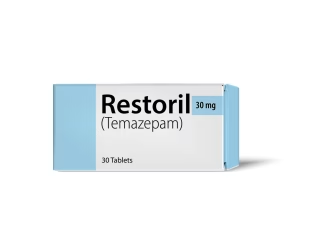 Buy Restoril Online
 -
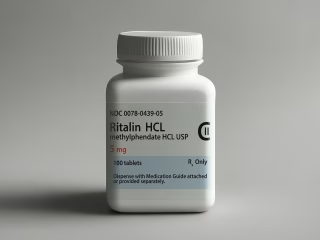 Buy Ritalin Online
 -
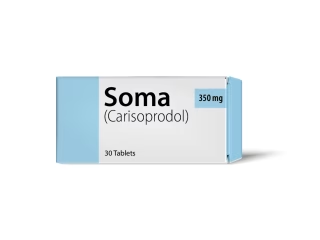 Buy Soma Online
 -
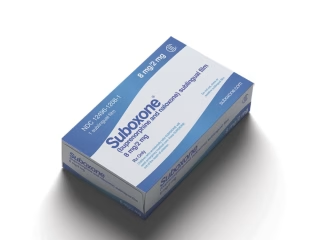 Buy Suboxone Online
 -
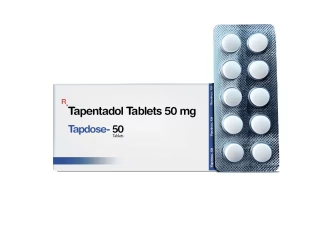 Buy Tapentadol Online
 -
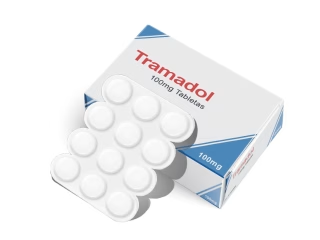 Buy Tramadol Online
 -
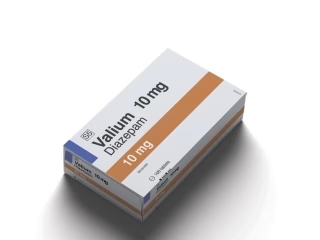 Buy Valium Online
 -
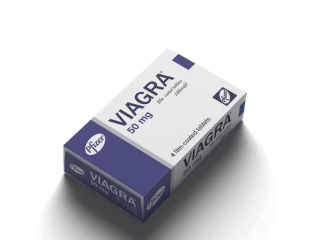 Buy Viagra Online
 -
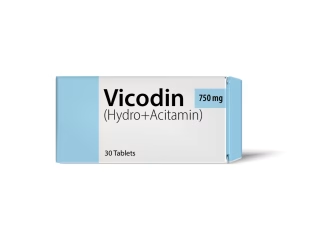 Buy Vicodin Online
 -
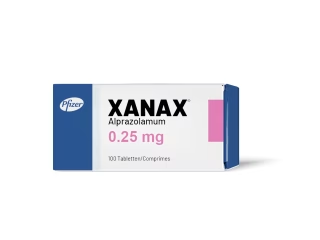 Buy Xanax Online
 -
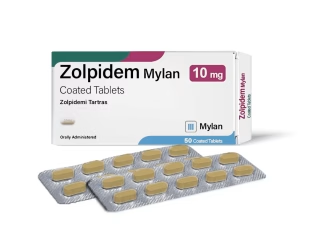 Buy Zolpidem Online
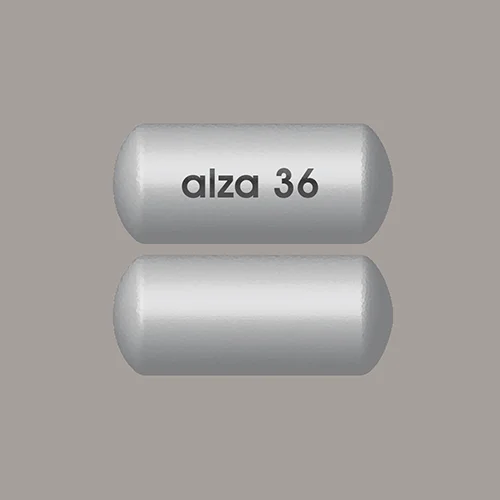
Concerta ER 36mg
$337.00
| 60 Pills | $337.00 | |
| 120 Pills | $499.00 | |
| 180 Pills | $692.00 | |
| 240 Pills | $896.00 | |
| 300 Pills | $1,072.00 |
What Is Concerta ER 36 mg?
Concerta ER 36 mg is a mid-to-high strength extended-release (ER) tablet of methylphenidate hydrochloride, a central nervous system (CNS) stimulant used to treat Attention-Deficit/Hyperactivity Disorder (ADHD). It is classified as a Schedule II controlled substance in the United States due to its high potential for abuse and dependence.
The 36 mg strength is the most commonly used maintenance dose for both pediatric and adult patients. It sits between the 27 mg titration step and the 54 mg maximum pediatric dose. The tablet is white, capsule-shaped, and imprinted with “alza 36”.
What Concerta ER 36 mg Is Prescribed For
Concerta is FDA-approved for one primary indication:
- Attention-Deficit/Hyperactivity Disorder (ADHD): For the treatment of ADHD in patients aged 6 to 65 years old. It may help increase attention and decrease impulsiveness and hyperactivity.
Important limitation: Concerta is not recommended for children under 6 years of age because they have higher plasma exposure and a higher incidence of adverse reactions (such as weight loss) at the same dosage compared to patients 6 years and older.
Concerta is intended as part of a comprehensive treatment program that may include psychological, educational, and social measures.
Active Ingredients
The active ingredient in Concerta ER 36 mg is methylphenidate hydrochloride in a controlled-release formulation.
Concerta uses an osmotic delivery system (OROS) designed to release methylphenidate at a controlled rate over approximately 12 hours. The system consists of a trilayer core surrounded by a semipermeable membrane with an immediate-release drug overcoat. The drug overcoat dissolves within one hour, providing an initial dose, while the osmotic core controls the extended release.
The biologically inert tablet shell remains intact during gastrointestinal transit and is eliminated in the stool. Patients should not be concerned if they occasionally notice something resembling a tablet in their stools.
Available Strengths
Concerta extended-release tablets are available in four strengths:
Strength Color/Imprint 18 mg Yellow, “alza 18” 27 mg Gray, “alza 27” 36 mg White, “alza 36” 54 mg Brownish-red, “alza 54”
Dosage Guidelines
Patients New to Methylphenidate (6–17 years): The recommended starting dose is 18 mg once daily in the morning. Doses may be increased in 18 mg increments at weekly intervals for patients who have not achieved an optimal response at a lower dose.
Adults (18–65 years): The recommended starting dose is 18 or 36 mg once daily. Doses may be increased in 18 mg increments at weekly intervals.
Dose Ranges by Age:
Patient Age Recommended Starting Dose Dose Range Children 6–12 years 18 mg/day 18 mg – 54 mg/day Adolescents 13–17 years 18 mg/day 18 mg – 72 mg/day (not to exceed 2 mg/kg/day) Adults 18–65 years 18 or 36 mg/day 18 mg – 72 mg/dayPatients Currently Taking Methylphenidate: For patients switching from immediate-release methylphenidate taken three times daily, a previous total daily dose of 10 mg three times daily converts to 36 mg once daily of Concerta.
Administration: Concerta must be swallowed whole with the aid of liquids. Do not chew, divide, or crush the tablet. It may be taken with or without food.
Important Safety Information (Boxed Warning)
Abuse, Misuse, and Addiction: Concerta has a high potential for abuse and misuse, which can lead to the development of a substance use disorder, including addiction. Misuse and abuse of CNS stimulants, including Concerta, can result in overdose and death. This risk is increased with higher doses or unapproved methods of administration, such as snorting or injection.
Before prescribing, healthcare providers should assess each patient’s risk for abuse, misuse, and addiction. Throughout treatment, risk should be reassessed and patients monitored for signs and symptoms of abuse, misuse, and addiction.
Concerta may lead to physical dependence after prolonged use, even if taken as directed.
Do not give Concerta to anyone else. Selling or giving away this medication is against the law and may harm others.
Explore More Product
Common Side Effects
Pediatric patients 6 to 17 years: The most common adverse reaction (≥5%) in double-blind clinical trials was upper abdominal pain.
Adults up to 65 years: The most common adverse reactions (≥5%) were decreased appetite, headache, dry mouth, nausea, insomnia, anxiety, dizziness, weight decreased, irritability, tachycardia, and hyperhidrosis.
Important Warnings
Cardiovascular Risks: Sudden death has happened in people who have heart defects or other serious heart disease. Healthcare providers should check patients carefully for heart problems before starting treatment. Patients should seek immediate medical attention for signs of heart problems such as chest pain, shortness of breath, or fainting during treatment.
Blood Pressure and Heart Rate: Concerta causes increases in average blood pressure and heart rate. Blood pressure and heart rate should be checked regularly during treatment.
Mental (Psychiatric) Problems: Stimulants may cause new or worsening mental problems, including new psychotic symptoms (such as hearing voices or seeing or believing things that are not real) or new manic symptoms. Patients should be monitored for new or worsening mental symptoms during treatment.
Long-Term Growth Suppression: CNS stimulants have been associated with weight loss and a slowing of growth rate in children. Careful follow-up suggests consistently medicated children may have a temporary slowing in growth rate (on average, about 2 cm less growth in height and 2.7 kg less growth in weight over 3 years). Height and weight should be monitored during treatment.
Peripheral Vasculopathy (Raynaud’s Phenomenon): Stimulants are associated with circulation problems in fingers and toes. Signs include fingers or toes feeling numb, cool, or painful, or changing color from pale to blue to red.
Priapism: Prolonged and painful erections, sometimes requiring surgical intervention, have been reported with methylphenidate products, including Concerta. Patients who develop abnormally sustained or frequent and painful erections should seek immediate medical attention.
Seizures: Stimulants may lower the convulsive threshold. Concerta should be discontinued if seizures occur.
New or Worsening Tics: Concerta may cause or worsen motor and verbal tics, or worsen Tourette’s syndrome. Before initiating treatment, assess family history and clinically evaluate patients for tics.
Gastrointestinal Obstruction: Because the Concerta tablet is nondeformable and does not appreciably change in shape in the GI tract, it should not ordinarily be administered to patients with pre-existing severe gastrointestinal narrowing. It should only be used in patients who are able to swallow the tablet whole.
Drug Interactions
MAOIs (Monoamine Oxidase Inhibitors): Concerta is contraindicated in patients receiving MAOIs, or within 14 days following discontinuation of an MAOI, because of the risk of a hypertensive crisis.
Anticoagulants (Coumarin): Methylphenidate may inhibit the metabolism of coumarin anticoagulants. Dosage adjustment and coagulation time monitoring may be necessary.
Anticonvulsants (Phenobarbital, Phenytoin, Primidone): Methylphenidate may inhibit metabolism. Dosage adjustment and plasma concentration monitoring may be necessary.
Antidepressants (Tricyclics, SSRIs, SNRIs): Methylphenidate may inhibit metabolism. Taking methylphenidate with these types of medicines could cause a life-threatening increase of serotonin in the brain (serotonin syndrome), which may lead to feeling confused or restless, sweating, shivering, muscle jerks, or fast heartbeat.
Antihypertensives: Methylphenidate may decrease the effectiveness of drugs used to treat hypertension. Monitor blood pressure and adjust dosage as needed.
Alcohol: Alcohol may enhance the CNS-related side effects of Concerta. Patients should abstain from alcohol during treatment.
Halogenated Anesthetics: There is a risk of sudden increase in blood pressure and heart rate during surgery. Concerta should not be used on the day of surgery.
Who Should Not Take Concerta ER 36 mg
Concerta is contraindicated in patients:
- Known to be hypersensitive to methylphenidate or other components of Concerta
- Receiving concomitant MAOIs, or within 14 days following discontinuation of an MAOI
- With poorly controlled open-angle or angle-closure glaucoma
- With hyperthyroidism, cardiac dysrhythmias, ischemic heart disease, or uncontrolled hypertension
How Prescriptions Work
As a Schedule II controlled substance, Concerta ER 36 mg prescriptions are subject to strict federal and state regulations:
- No refills allowed: Federal law prohibits refills on Schedule II prescriptions. A new prescription is required each time.
- Limited quantity: Many jurisdictions limit the quantity that can be prescribed at once (often a 30-day supply).
- Regular follow-up: Patients may need regular follow-up visits before receiving a new prescription.
- Lowest effective dose: Prescribers should individualize dosage and use the lowest effective dose.
- Safe storage: Keep Concerta in a safe place to prevent misuse and abuse. Store at room temperature. Never share Concerta with others.
Frequently Asked Questions
Is Concerta ER 36 mg safe for long-term use?
The safety and efficacy of long-term use (more than 12 months) have not been systematically evaluated in controlled trials. Physicians should periodically re-evaluate the long-term usefulness for each patient.
Does Concerta ER 36 mg affect sleep?
Insomnia is a common side effect. Taking the medication earlier in the morning can help minimize sleep difficulties. Concerta should be taken upon awakening.
Can I stop taking Concerta ER 36 mg suddenly?
Abrupt discontinuation after prolonged use can lead to withdrawal symptoms. This should be managed under medical supervision.
What does “ER” mean in Concerta ER 36 mg?
ER stands for extended-release. Concerta uses an osmotic delivery system designed to release methylphenidate at a controlled rate over approximately 12 hours, allowing for once-daily dosing.
Is Concerta ER 36 mg the same as Ritalin 36 mg?
No. Concerta ER 36 mg is an extended-release tablet, while Ritalin is an immediate-release tablet. They have different onset times, durations, and dosing schedules.
Can Concerta ER 36 mg be crushed or split?
No. Concerta must be swallowed whole with liquids. It must not be chewed, divided, or crushed. Crushing the tablet destroys the extended-release mechanism and can cause a rapid release of the full dose, increasing the risk of overdose.
What should I do if I miss a dose?
Take the missed dose as soon as you remember, unless it is almost time for the next dose. Do not take two doses at once. Concerta should be taken in the morning to minimize insomnia.
Conclusion
Concerta ER 36 mg is a mid-to-high strength extended-release stimulant approved for ADHD in patients 6 to 65 years of age. It is a commonly used maintenance dose that provides approximately 12 hours of symptom coverage with once-daily morning dosing. As a Schedule II controlled substance, it carries a boxed warning for abuse, misuse, and addiction, and requires strict prescribing controls. Common side effects include upper abdominal pain in children and decreased appetite, headache, dry mouth, and insomnia in adults. Serious risks include cardiovascular events, psychiatric symptoms, growth suppression in children, peripheral vasculopathy, priapism, and gastrointestinal obstruction in patients with pre-existing narrowing. The tablet must be swallowed whole and never crushed or split. Patients should use the lowest effective dose, monitor height and weight (in children), store the medication securely, and never share it with others. Any changes to treatment should be managed under medical supervision.
Concerta ER 27 mg is a mid-strength extended-release (ER) tablet of methylphenidate hydrochloride, a central nervous system (CNS) stimulant used to treat Attention-Deficit/Hyperactivity Disorder (ADHD). It is classified as a Schedule II controlled substance in the United States due to its high potential for abuse and dependence.
The 27 mg strength sits between the 18 mg starting dose and the 36 mg maintenance dose.
Related products
-
$342.00Select options This product has multiple variants. The options may be chosen on the product page
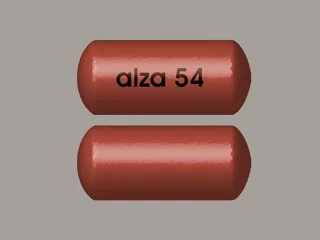
What Is Concerta ER 54 mg? Concerta ER 54 mg is the highest available strength of the extended-release (ER) tablet formulation of methylphenidate hydrochloride, a central nervous system (CNS) stimulant used to treat Attention-Deficit/Hyperactivity Disorder (ADHD). It is classified as a Schedule II controlled substance in the United States due to its high potential for …
-
$312.00Select options This product has multiple variants. The options may be chosen on the product page
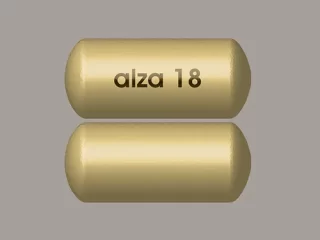
What Is Concerta ER 18 mg? Concerta ER 18 mg is the lowest available strength of the extended-release (ER) tablet formulation of methylphenidate hydrochloride, a central nervous system (CNS) stimulant used to treat Attention-Deficit/Hyperactivity Disorder (ADHD). It is classified as a Schedule II controlled substance in the United States due to its high potential for …
-
$312.00Select options This product has multiple variants. The options may be chosen on the product page
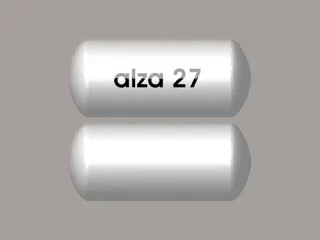
What Is Concerta ER 27 mg? Concerta ER 27 mg is a mid-strength extended-release (ER) tablet of methylphenidate hydrochloride, a central nervous system (CNS) stimulant used to treat Attention-Deficit/Hyperactivity Disorder (ADHD). It is classified as a Schedule II controlled substance in the United States due to its high potential for abuse and dependence. The 27 …
Reviews
There are no reviews yet.