
Product Category
-
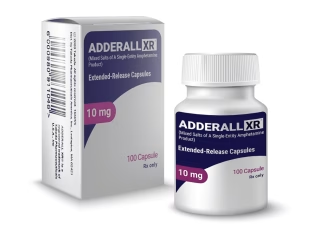 Buy Adderall Online
 -
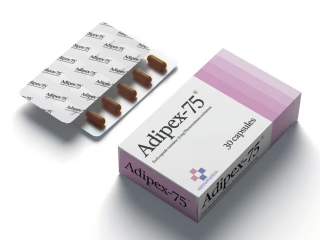 Buy Adipex Online
 -
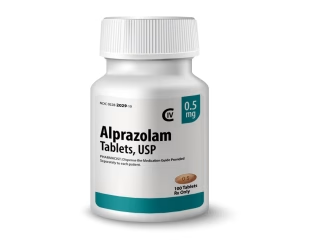 Buy Alprazolam Online
 -
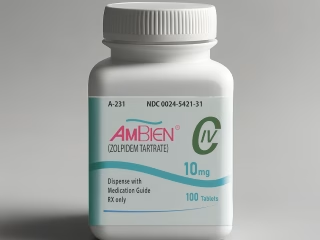 Buy Ambien Online
 -
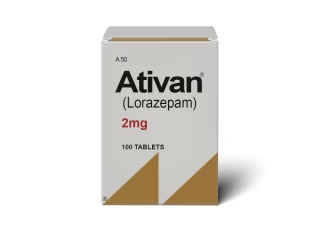 Buy Ativan Online
 -
 Buy Belbien Online
 -
 Buy Buprenorphine Online
 -
 Buy Butalbital Online
 -
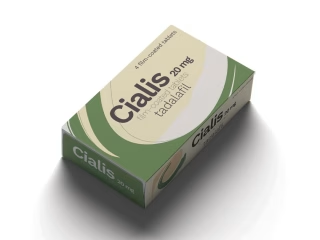 Buy Cialis Online
 -
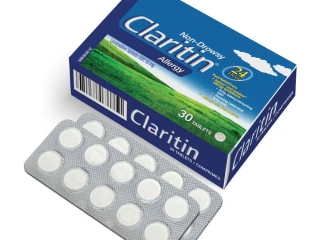 Buy Claritin Online
 -
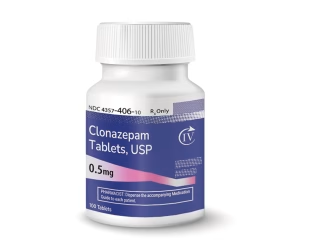 Buy Clonazepam Online
 -
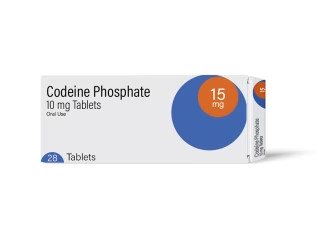 Buy Codeine Online
 -
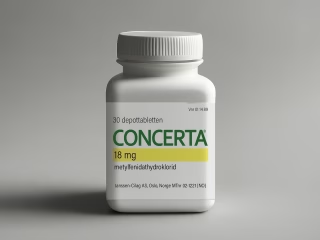 Buy Concerta Online
 -
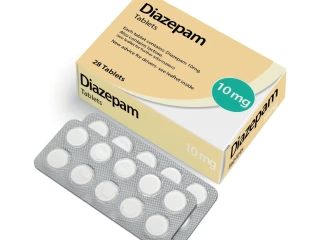 Buy Diazepam Online
 -
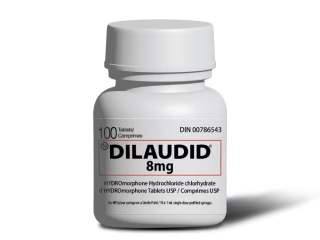 Buy Dilaudid Online
 -
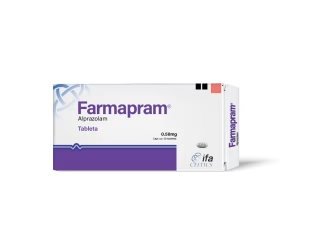 Buy Farmapram Online
 -
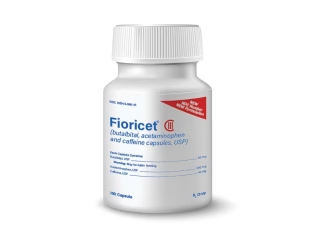 Buy Fioricet Online
 -
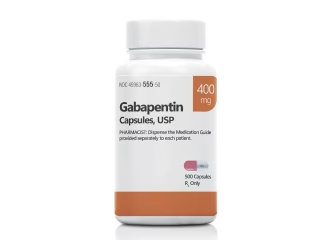 Buy Gabapentin Online
 -
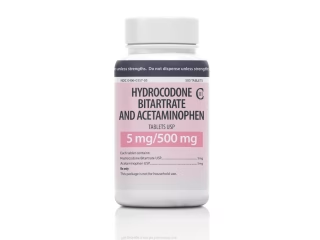 Buy Hydrocodone Online
 -
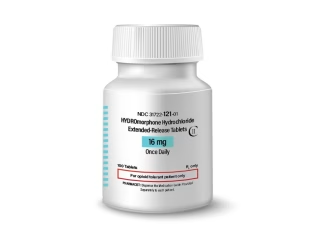 Buy Hydromorphone Online
 -
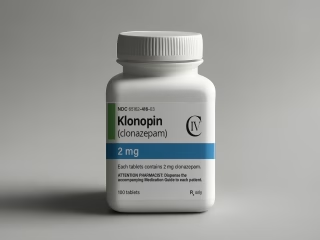 Buy Klonopin Online
 -
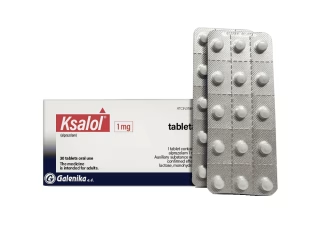 Buy Ksalol Online
 -
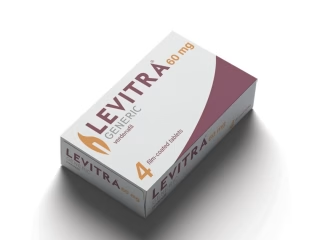 Buy Levitra Online
 -
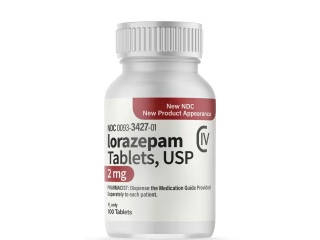 Buy Lorazepam Online
 -
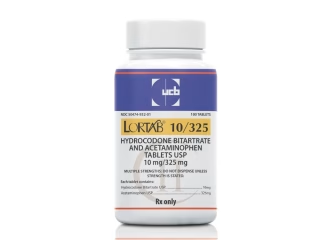 Buy Lortab Online
 -
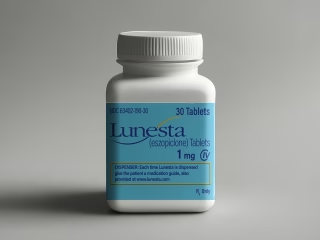 Buy Lunesta Online
 -
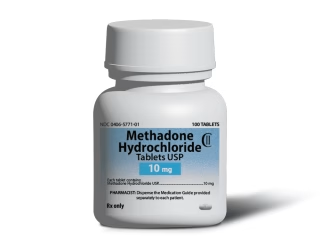 Buy Methadone Online
 -
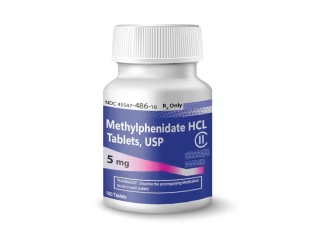 Buy Methylphenidate Online
 -
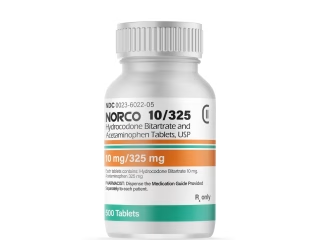 Buy Norco Online
 -
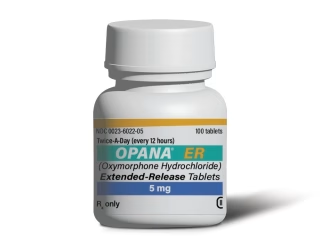 Buy Opana ER Online
 -
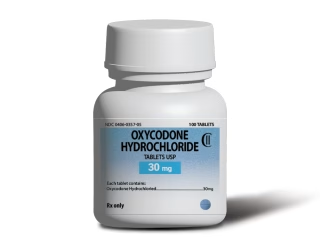 Buy Oxycodone Online
 -
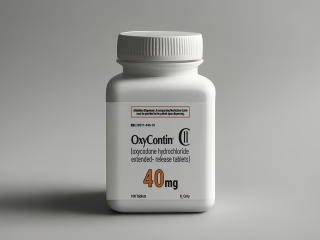 Buy Oxycontin Online
 -
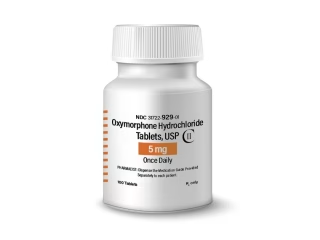 Buy Oxymorphone Online
 -
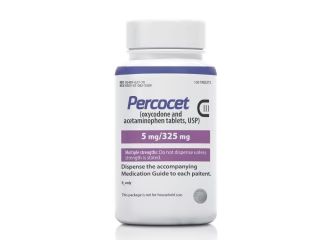 Buy Percocet Online
 -
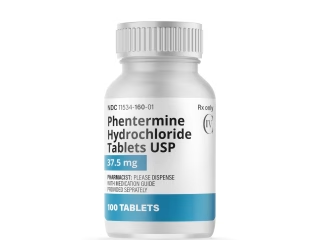 Buy Phentermine Online
 -
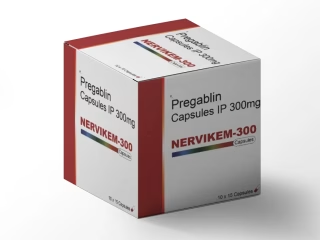 Buy Pregabalin Online
 -
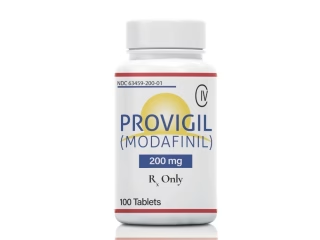 Buy Provigil Online
 -
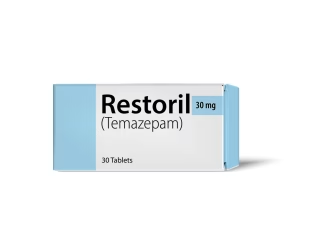 Buy Restoril Online
 -
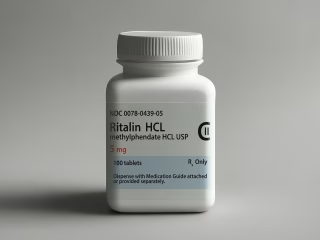 Buy Ritalin Online
 -
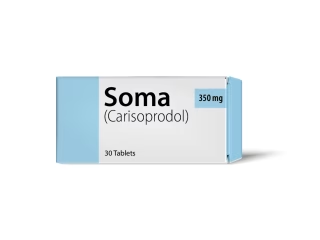 Buy Soma Online
 -
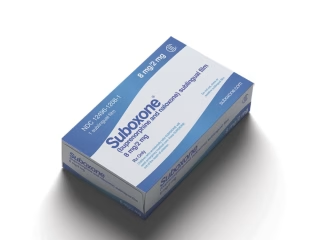 Buy Suboxone Online
 -
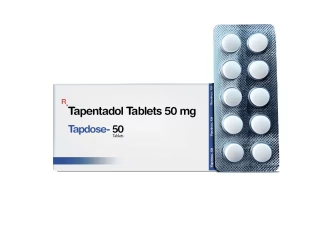 Buy Tapentadol Online
 -
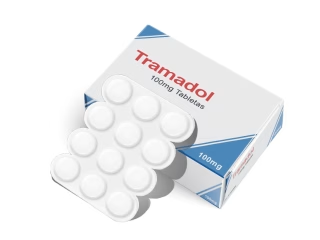 Buy Tramadol Online
 -
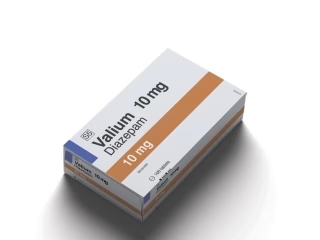 Buy Valium Online
 -
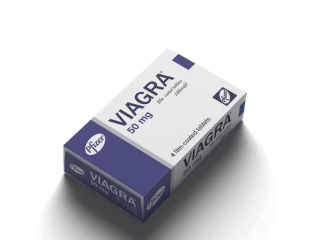 Buy Viagra Online
 -
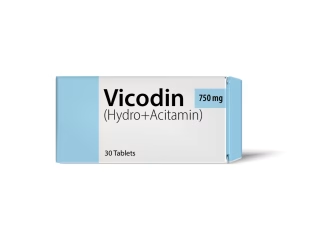 Buy Vicodin Online
 -
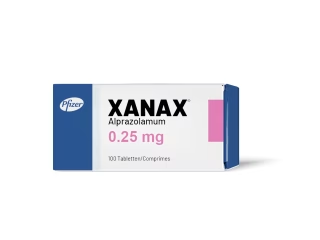 Buy Xanax Online
 -
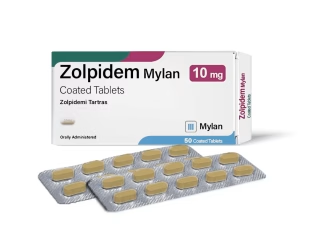 Buy Zolpidem Online
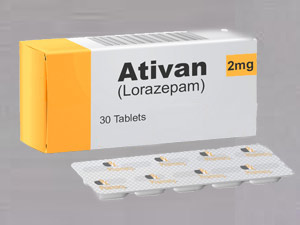
Ativan 2mg
$357.00
| 60 Pills | $357.00 | |
| 120 Pills | $457.00 | |
| 180 Pills | $557.00 | |
| 240 Pills | $707.00 | |
| 300 Pills | $807.00 |
What Is Ativan 2 mg?
Ativan 2 mg is the highest available strength of the immediate-release tablet formulation of lorazepam, a benzodiazepine used to treat anxiety disorders. It is a central nervous system (CNS) depressant classified as a Schedule IV controlled substance in the United States because it can be abused or lead to dependence .
The 2 mg strength is typically reserved for patients who require higher-dose therapy or for those who have been titrated upward from lower strengths. It is not a starting dose for most adults.
What Ativan 2 mg Is Prescribed For
Ativan is FDA-approved for the following conditions :
-
Anxiety Disorders: For the management of anxiety disorders or for the short-term relief of the symptoms of anxiety or anxiety associated with depressive symptoms.
-
Insomnia: Due to anxiety or transient situational stress.
Important limitation: It is not known if lorazepam tablets are safe and effective for use longer than 4 months . Treatment should be reevaluated periodically.
Not for children under 12: Safety and effectiveness of Ativan in children less than 12 years of age have not been established .
Active Ingredients
The active ingredient in Ativan 2 mg is lorazepam, a benzodiazepine with anxiolytic, sedative, and anticonvulsant properties .
Inactive ingredients include lactose monohydrate, magnesium stearate, microcrystalline cellulose, and polacrilin potassium .
The 2 mg tablet is described as a white, five-sided (regular pentagon) tablet with a raised “A” and impressed “2” on one side and “BPI” and “65” impressed on scored reverse side .
Available Strengths
Lorazepam immediate-release tablets are available in three strengths :
| Strength | Typical Appearance | Typical Use |
|---|---|---|
| 0.5 mg | White, five-sided (shield shape) | Starting dose; elderly or sensitive patients |
| 1 mg | White, five-sided (shield shape) | Common maintenance dose |
| 2 mg | White, five-sided (regular pentagon) | Higher-dose therapy |
Dosage Guidelines
Anxiety: The usual range is 2 to 6 mg/day, given in divided doses, with the largest dose taken at bedtime. The daily dosage may vary from 1 to 10 mg/day .
Insomnia Due to Anxiety: A single daily dose of 2 to 4 mg may be given, usually at bedtime .
Elderly or Debilitated Patients: An initial dosage of 1 to 2 mg/day in divided doses is recommended, to be adjusted as needed and tolerated . The initial dosage should not exceed 2 mg .
Hepatic Impairment: Lower doses may be sufficient. Dosage should be adjusted carefully according to patient response .
Discontinuation: To reduce the risk of withdrawal reactions, use a gradual taper to discontinue Ativan or reduce the dosage. Abrupt discontinuation or rapid dosage reduction after continued use may precipitate acute withdrawal reactions, which can be life-threatening (e.g., seizures) .
Important Safety Information (Boxed Warning)
Risks from Concomitant Use with Opioids: Concomitant use of benzodiazepines, including Ativan, and opioids may result in profound sedation, respiratory depression, coma, and death. Reserve concomitant prescribing of these drugs for patients for whom alternative treatment options are inadequate. Limit dosages and durations to the minimum required. Follow patients closely for signs and symptoms of respiratory depression and sedation .
Abuse, Misuse, and Addiction: The use of benzodiazepines, including Ativan, exposes users to risks of abuse, misuse, and addiction, which can lead to overdose or death. Abuse and misuse of benzodiazepines often involve the use of doses greater than the maximum recommended dosage and commonly involve concomitant use of other medications, alcohol, and/or illicit substances. Before prescribing Ativan and throughout treatment, assess each patient’s risk for abuse, misuse, and addiction .
Physical Dependence and Withdrawal Reactions: Ativan can cause physical dependence and withdrawal reactions. Abrupt discontinuation or rapid dosage reduction after continued use may precipitate acute withdrawal reactions, which can be life-threatening (e.g., seizures). The risk of seizure seems to be greatest 24–72 hours after discontinuation .
Do not stop taking Ativan suddenly. A gradual dosage tapering schedule is required.
Common Side Effects
The most common side effects of Ativan include :
-
Sedation
-
Dizziness
-
Weakness
-
Unsteadiness
These effects are often transient and may improve over the first week or two of treatment.
Important Warnings
CNS Depression and Impaired Performance: Ativan can make you sleepy or dizzy and can slow your thinking and motor skills. Do not drive, operate heavy machinery, or do other dangerous activities until you know how Ativan affects you .
Depression: Pre-existing depression may emerge or worsen during use of benzodiazepines including Ativan. In patients with depression, a possibility for suicide should be borne in mind; benzodiazepines should not be used in such patients without adequate antidepressant therapy .
Respiratory Depression: Use of benzodiazepines, including lorazepam, both used alone and in combination with other CNS depressants, may lead to potentially fatal respiratory depression. Lorazepam should be used with caution in patients with compromised respiratory function (e.g., COPD, sleep apnea syndrome) .
Paradoxical Reactions: Paradoxical reactions (e.g., agitation, irritability, violent behavior, confusion) have been occasionally reported during benzodiazepine use. These reactions may be more likely to occur in children and the elderly. If these occur, use of the drug should be discontinued .
Pregnancy: Use of Ativan late in pregnancy can result in sedation (respiratory depression, lethargy, hypotonia) and/or withdrawal symptoms (hyperreflexia, irritability, restlessness, tremors, inconsolable crying, feeding difficulties) in the neonate. Monitor neonates exposed to Ativan during pregnancy or labor for signs of sedation and withdrawal .
Lactation: Lorazepam is present in breast milk. Breastfeeding during treatment with Ativan may cause your baby to have sleepiness, feeding problems, and decreased weight gain. Monitor infants for excessive sedation, poor feeding, and poor weight gain .
Hepatic Impairment: As with all benzodiazepines, the use of lorazepam may worsen hepatic encephalopathy; therefore, lorazepam should be used with caution in patients with severe hepatic insufficiency and/or encephalopathy .
Drug Interactions
Opioids: The concomitant use of benzodiazepines and opioids increases the risk of respiratory depression. Limit dosage and duration of concomitant use, and monitor patients closely .
CNS Depressants: Benzodiazepines, including Ativan, produce increased CNS-depressant effects when administered with other CNS depressants such as alcohol, barbiturates, antipsychotics, sedative/hypnotics, anxiolytics, antidepressants, narcotic analgesics, sedative antihistamines, anticonvulsants, and anesthetics .
Clozapine: Concomitant use may produce marked sedation, excessive salivation, hypotension, ataxia, delirium, and respiratory arrest .
Valproate: Concurrent administration results in increased plasma concentrations and reduced clearance of lorazepam. Lorazepam dosage should be reduced to approximately 50% when coadministered with valproate .
Probenecid: May result in a more rapid onset or prolonged effect of lorazepam. Lorazepam dosage needs to be reduced by approximately 50% when coadministered with probenecid .
Theophylline/Aminophylline: May reduce the sedative effects of benzodiazepines, including lorazepam .
Who Should Not Take Ativan 2 mg
Ativan is contraindicated in patients with :
-
Known hypersensitivity to lorazepam or other benzodiazepines.
-
Acute narrow-angle glaucoma.
How Prescriptions Work
As a Schedule IV controlled substance, Ativan prescriptions are subject to federal and state regulations:
-
Refills: Schedule IV prescriptions may be refilled up to 5 times within 6 months from the date written, unless otherwise restricted by state law.
-
Regular follow-up: Patients should have regular follow-up visits to reassess the continued need for treatment.
-
Lowest effective dose: Prescribe the lowest effective dosage for the shortest duration necessary .
-
Tapering required: Discontinuation should be gradual. Abrupt discontinuation can cause life-threatening withdrawal reactions .
-
Safe storage: Keep Ativan in a safe place to prevent misuse or abuse. Do not share your Ativan with other people. Selling or giving away Ativan may harm others and is against the law. Store at 20° to 25°C (68° to 77°F) .
Frequently Asked Questions
Is Ativan 2 mg safe for long-term use?
It is not known if lorazepam tablets are safe and effective for use for longer than 4 months . Benzodiazepines are often used for short periods of time only. They may produce emotional and/or physical dependence even when used as recommended .
Does Ativan 2 mg affect sleep?
Ativan is sometimes used for insomnia due to anxiety or transient situational stress . However, it can cause sedation and drowsiness. Taking the medication as prescribed and avoiding alcohol can help minimize impairment.
Can I stop taking Ativan 2 mg suddenly?
No. Abrupt discontinuation can cause serious and life-threatening side effects including seizures. A gradual taper under medical supervision is required .
What does “2 mg” mean in Ativan 2 mg?
The 2 mg refers to the amount of lorazepam active ingredient in each tablet. It is the highest available immediate-release strength.
Is Ativan 2 mg the same as lorazepam 2 mg?
Yes. Ativan is the brand name for lorazepam. Ativan 2 mg is the brand-name version of lorazepam 2 mg.
Can Ativan 2 mg be split?
The 2 mg tablet has a scored reverse side, which may allow splitting. However, patients should only split tablets if instructed by their prescriber, as accurate dosing cannot always be guaranteed .
What is the difference between Ativan and Xanax?
Both are benzodiazepines, but they have different active ingredients. Ativan contains lorazepam and has a longer duration of action. Xanax contains alprazolam and has a faster onset but shorter duration. They are both Schedule IV controlled substances.
Conclusion
Ativan 2 mg is the highest-strength immediate-release benzodiazepine approved for anxiety disorders and insomnia due to anxiety. As a Schedule IV controlled substance, it carries a boxed warning for risks when combined with opioids, abuse and addiction potential, and life-threatening withdrawal reactions . Common side effects include sedation, dizziness, weakness, and unsteadiness. Serious risks include respiratory depression when combined with CNS depressants, physical dependence, and seizures upon abrupt discontinuation. The 2 mg strength is reserved for higher-dose therapy and should be used at the lowest effective dose for the shortest duration necessary. Patients should avoid alcohol, store the medication securely, and never stop treatment suddenly without medical supervision .
3 reviews for Ativan 2mg
Related products
-
$337.00Select options This product has multiple variants. The options may be chosen on the product page
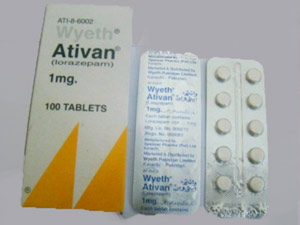
What Is Ativan 1 mg? Ativan 1 mg is a mid-strength immediate-release tablet of lorazepam, a benzodiazepine used to treat anxiety disorders. It is a central nervous system (CNS) depressant classified as a Schedule IV controlled substance in the United States because it can be abused or lead to dependence . The 1 mg strength …
Jamison Quinn
I had a great experience with this online pharmacy!
Donald Person
Quick delivery! I received my order faster than expected. Their efficient shipping service is commendable, and I could start my treatment promptly.
Saul Parsons
The packaging was discreet and well-protected. This extra attention to privacy made me feel confident in ordering from Myadderall.store