
Product Category
-
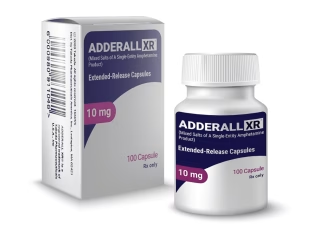 Buy Adderall Online
 -
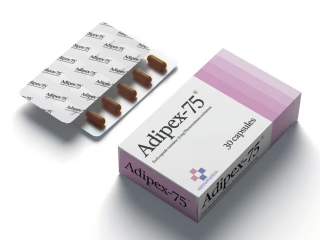 Buy Adipex Online
 -
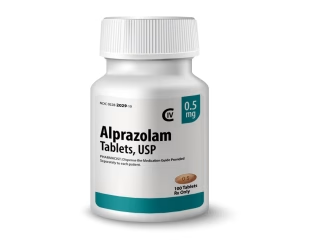 Buy Alprazolam Online
 -
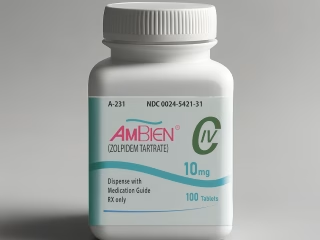 Buy Ambien Online
 -
 Buy Ativan Online
 -
 Buy Belbien Online
 -
 Buy Buprenorphine Online
 -
 Buy Butalbital Online
 -
 Buy Cialis Online
 -
 Buy Claritin Online
 -
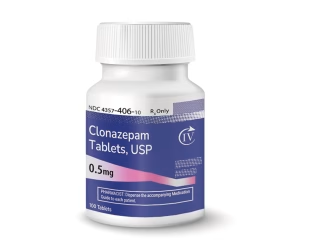 Buy Clonazepam Online
 -
 Buy Codeine Online
 -
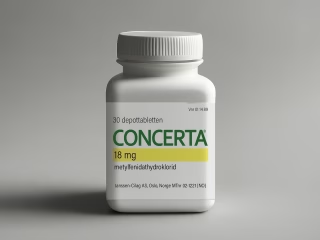 Buy Concerta Online
 -
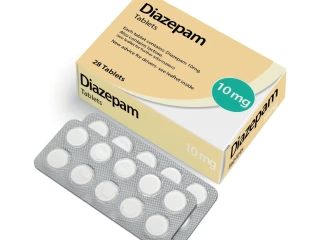 Buy Diazepam Online
 -
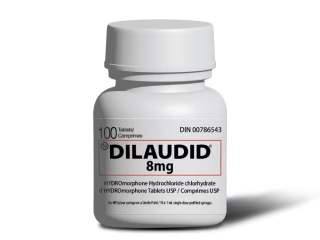 Buy Dilaudid Online
 -
 Buy Farmapram Online
 -
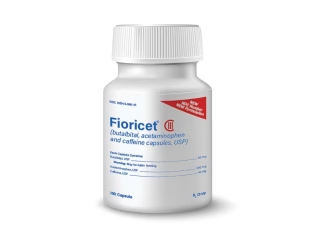 Buy Fioricet Online
 -
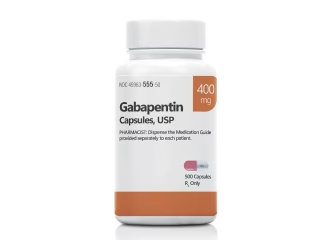 Buy Gabapentin Online
 -
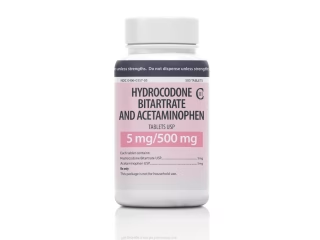 Buy Hydrocodone Online
 -
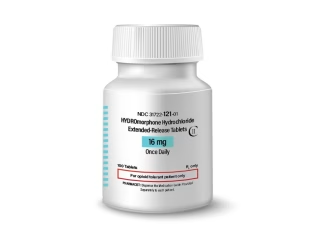 Buy Hydromorphone Online
 -
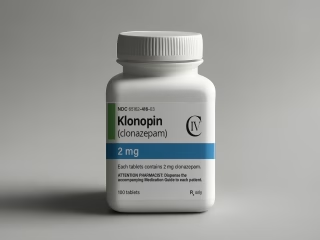 Buy Klonopin Online
 -
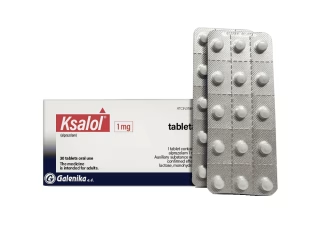 Buy Ksalol Online
 -
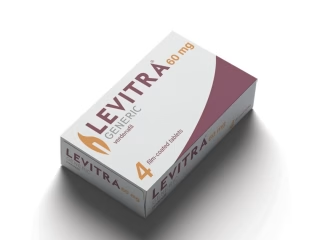 Buy Levitra Online
 -
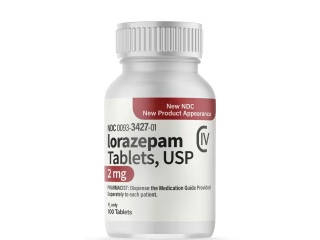 Buy Lorazepam Online
 -
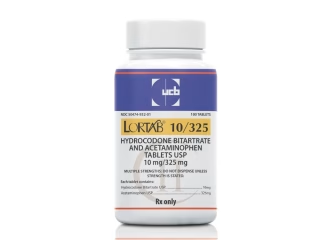 Buy Lortab Online
 -
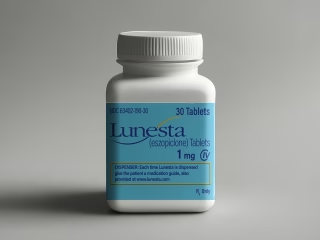 Buy Lunesta Online
 -
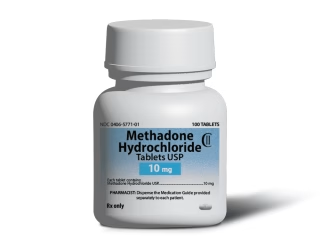 Buy Methadone Online
 -
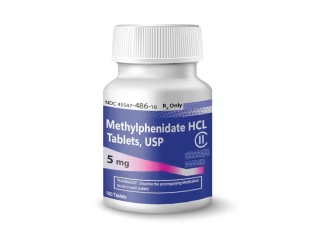 Buy Methylphenidate Online
 -
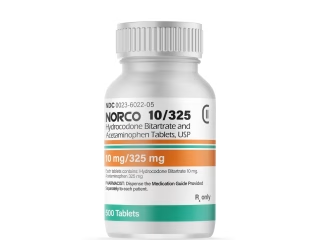 Buy Norco Online
 -
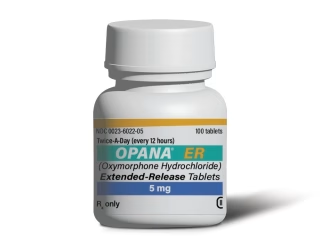 Buy Opana ER Online
 -
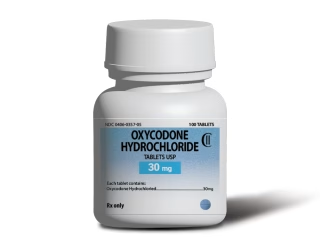 Buy Oxycodone Online
 -
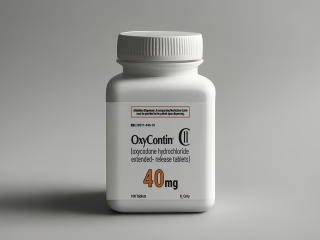 Buy Oxycontin Online
 -
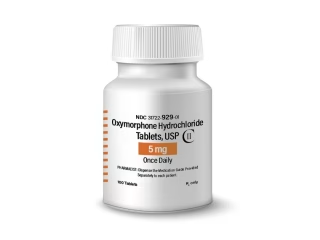 Buy Oxymorphone Online
 -
 Buy Percocet Online
 -
 Buy Phentermine Online
 -
 Buy Pregabalin Online
 -
 Buy Provigil Online
 -
 Buy Restoril Online
 -
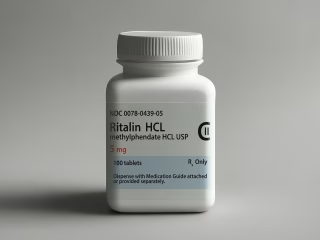 Buy Ritalin Online
 -
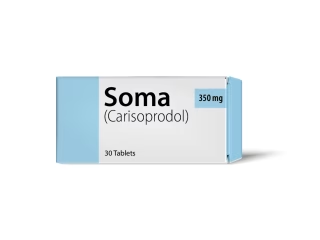 Buy Soma Online
 -
 Buy Suboxone Online
 -
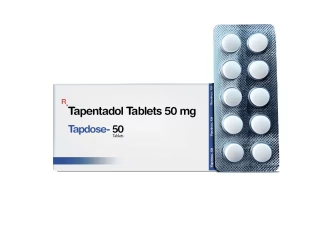 Buy Tapentadol Online
 -
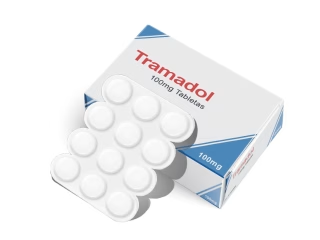 Buy Tramadol Online
 -
 Buy Valium Online
 -
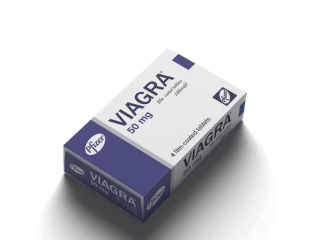 Buy Viagra Online
 -
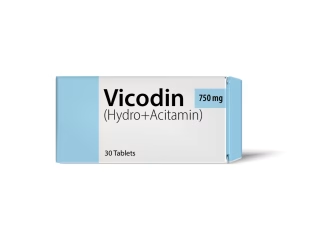 Buy Vicodin Online
 -
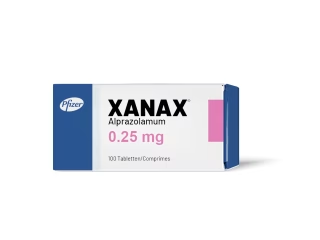 Buy Xanax Online
 -
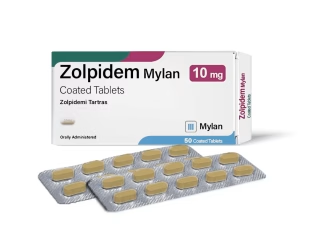 Buy Zolpidem Online
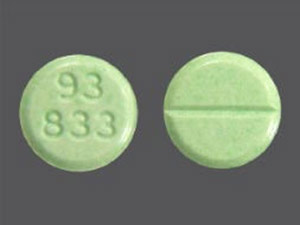
Clonazepam 1mg
$311.00
| 60 Pills | $311.00 | |
| 120 Pills | $367.00 | |
| 180 Pills | $467.00 | |
| 240 Pills | $577.00 | |
| 300 Pills | $667.00 |
What Is Clonazepam 1 mg?
Clonazepam 1 mg is a mid-strength immediate-release tablet of clonazepam, a benzodiazepine used to treat certain seizure disorders and panic disorder. It is a central nervous system (CNS) depressant classified as a Schedule IV controlled substance in the United States because it can be abused or lead to dependence.
The 1 mg strength is a commonly prescribed maintenance dose for both seizure disorders and panic disorder. It is also available as an orally disintegrating tablet (Klonopin Wafer) for patients who have difficulty swallowing tablets.
What Clonazepam 1 mg Is Prescribed For
Clonazepam is FDA-approved for two conditions:
- Seizure Disorders: Used alone or with other medicines to treat certain types of seizure disorders (epilepsy) in adults and children, including absence seizures and Lennox-Gastaut syndrome.
- Panic Disorder: Used to treat panic disorder, with or without agoraphobia, in adults.
Important limitation: The effectiveness of clonazepam for long-term use (more than 9 weeks for panic disorder) has not been systematically studied in controlled clinical trials. Physicians should periodically reevaluate the long-term usefulness of the drug for the individual patient.
Not for children with panic disorder: Safety and efficacy for treatment of panic disorder have not been established in children under 18 years of age.
Active Ingredients
The active ingredient is clonazepam, a benzodiazepine anticonvulsant.
Inactive ingredients vary by manufacturer and formulation. Regular tablets contain lactose and other standard excipients. Orally disintegrating tablets (wafers) contain gelatin and mannitol.
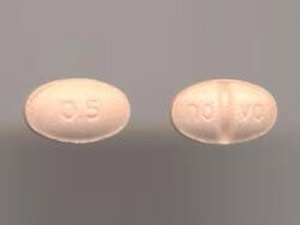
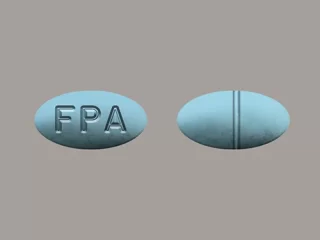
The 1 mg tablet is available in multiple appearances depending on the manufacturer:
Teva TEVA 833 Green Round Sandoz 93 833 Green Round Generic C 1 Blue Round Generic CE 193 White Round Klonopin (brand) 1 KLONOPIN Blue Round
Available Strengths
Clonazepam immediate-release tablets are available in three strengths:
- 0.5 mg: Starting dose; titration
- 1 mg: Common maintenance dose
- 2 mg: Higher-dose therapy
Orally disintegrating tablets (Klonopin Wafers) are available in 0.125 mg, 0.25 mg, 0.5 mg, 1 mg, and 2 mg strengths.
Dosage Guidelines
Seizure Disorders (Adults): The initial dose should not exceed 1.5 mg/day divided into three doses. The dose may be increased by 0.5 mg to 1 mg every 3 days until seizures are adequately controlled. The maximum recommended dose is 20 mg/day.
Panic Disorder (Adults): The initial dose is 0.25 mg twice daily, increasing after 3 days to 1 mg twice daily. The target dose after 3 days is 1 mg twice daily. Some patients may benefit from further increases up to a maximum of 4 mg/day.
Elderly or Debilitated Patients: Initiate therapy at a low dosage and observe closely. May need to assess hepatic and/or renal function when selecting dosage.
Administration: Swallow regular tablets whole with water. For orally disintegrating tablets, remove from package only when ready to take, place in mouth, and allow to dissolve without chewing.
Important Safety Information (Boxed Warning)
Risks from Concomitant Use with Opioids: Concomitant use of benzodiazepines, including clonazepam, and opioids may result in profound sedation, respiratory depression, coma, and death. Reserve concomitant prescribing of these drugs for patients for whom alternative treatment options are inadequate. Observational studies have demonstrated that concomitant use of opioid analgesics and benzodiazepines increases the risk of drug-related mortality compared to use of opioids alone.
Abuse, Misuse, and Addiction: The use of benzodiazepines, including clonazepam, exposes users to risks of abuse, misuse, and addiction, which can lead to overdose or death. Abuse and misuse often involve doses greater than the maximum recommended and commonly involve concomitant use of other medications, alcohol, and/or illicit substances. Before prescribing and throughout treatment, assess each patient’s risk for abuse, misuse, and addiction.
Dependence and Withdrawal Reactions: Clonazepam can cause physical dependence and withdrawal reactions. Abrupt discontinuation or rapid dosage reduction after continued use may precipitate acute withdrawal reactions, which can be life-threatening (e.g., seizures). The risk of withdrawal is increased in patients taking higher dosages and those with longer durations of use. To reduce risk, use a gradual taper to discontinue clonazepam or reduce the dosage. Some patients have developed a protracted withdrawal syndrome with symptoms lasting weeks to more than 12 months.
Do not stop taking clonazepam suddenly. Stopping suddenly can cause seizures that will not stop (status epilepticus).
Common Side Effects
The most common side effects of Klonopin include:
- Drowsiness
- Problems with walking and coordination (ataxia)
- Dizziness
- Depression
- Fatigue
- Problems with memory
Behavioral disturbances (principally in children) may include aggressiveness, irritability, agitation, and hyperkinesis.
Explore More
Important Warnings
CNS Depression and Impaired Performance: Clonazepam can slow your thinking and motor skills. Do not drive, operate heavy machinery, or do other dangerous activities until you know how clonazepam affects you.
Respiratory Depression: Clonazepam may cause serious or life-threatening breathing problems, drowsiness, or coma if used along with certain medications. Call your doctor immediately or seek emergency medical care if you experience unusual dizziness, lightheadedness, extreme sleepiness, slowed or difficult breathing, or unresponsiveness.
Suicidal Thoughts or Actions: Some people have thoughts about suicide while taking clonazepam. Tell your doctor right away if you have any sudden changes in mood or behavior, or thoughts about suicide. Your mental health may change in unexpected ways, and you may become suicidal. Call your doctor right away if you experience panic attacks, agitation, new or worsening irritability, anxiety, or depression, acting on dangerous impulses, difficulty sleeping, aggressive behavior, mania, or any other unusual changes in behavior or mood.
Seizure Worsening: Clonazepam can make your seizures happen more often or make them worse. Call your healthcare provider right away if your seizures get worse while taking clonazepam.
Liver Disease: Clonazepam is contraindicated in patients with significant liver disease.
Pregnancy: Taking clonazepam late in pregnancy may cause your baby to have symptoms of sedation (breathing problems, sluggishness, low muscle tone) and/or withdrawal symptoms (jitteriness, irritability, restlessness, shaking, excessive crying, feeding problems).
Breastfeeding: Clonazepam can pass into breast milk. Breastfeeding during treatment may cause your baby to have sleepiness, feeding problems, and decreased weight gain.
Drug Interactions
- Opioids: Concomitant use increases the risk of respiratory depression, coma, and death.
- CNS Depressants (e.g., alcohol, barbiturates, sedatives): May potentiate CNS depression.
- Antifungal Agents (azole-type, e.g., itraconazole, ketoconazole): Possible increase in plasma clonazepam concentrations.
- Carbamazepine: Decreased plasma clonazepam concentrations.
- Valproic acid: Concomitant use may produce absence status.
Who Should Not Take Clonazepam 1 mg
Clonazepam is contraindicated in patients with:
- Hypersensitivity to benzodiazepines
- Significant liver disease
- Acute narrow-angle glaucoma (may be administered to patients with open-angle glaucoma receiving appropriate therapy)
How Prescriptions Work
As a Schedule IV controlled substance, clonazepam 1 mg prescriptions are subject to federal and state regulations:
- Refills: Schedule IV prescriptions may be refilled up to 5 times within 6 months from the date written, unless otherwise restricted by state law.
- Regular follow-up: Patients should have regular follow-up visits to reassess the continued need for treatment.
- Lowest effective dose: Prescribers should individualize dosage and use the lowest effective dose.
- Tapering required: Discontinuation should be gradual. Abrupt discontinuation can cause life-threatening withdrawal reactions including status epilepticus.
- Safe storage: Keep clonazepam in a safe place to prevent misuse and abuse. Selling or giving away clonazepam may harm others and is against the law.
Frequently Asked Questions
Is clonazepam 1 mg safe for long-term use?
The effectiveness of clonazepam for long-term use (more than 9 weeks for panic disorder) has not been systematically studied. Physicians should periodically reevaluate the long-term usefulness of the drug for the individual patient.
Does clonazepam 1 mg affect sleep?
Drowsiness and fatigue are common side effects. Clonazepam can slow your thinking and motor skills. Do not drive or operate machinery until you know how it affects you.
Can I stop taking clonazepam 1 mg suddenly?
No. Abrupt discontinuation can cause serious and life-threatening side effects including seizures that will not stop (status epilepticus). A gradual taper under medical supervision is required.
What does “1 mg” mean in clonazepam 1 mg?
The 1 mg refers to the amount of clonazepam active ingredient in each tablet. It is a mid-strength immediate-release formulation.
Is clonazepam 1 mg the same as Klonopin 1 mg?
Yes. Clonazepam is the generic name for the active ingredient in Klonopin. Clonazepam 1 mg is the generic equivalent of Klonopin 1 mg.
Can clonazepam 1 mg be split?
Clonazepam tablets are typically scored, which may allow splitting. However, patients should only split tablets if instructed by their prescriber, as accurate dosing cannot always be guaranteed.
What is the difference between clonazepam 1 mg and clonazepam 0.5 mg?
Clonazepam 1 mg is one titration step higher than 0.5 mg. It is commonly used as a maintenance dose once the patient has been stabilized on a lower strength.
Conclusion
Clonazepam 1 mg is a mid-strength immediate-release benzodiazepine approved for seizure disorders and panic disorder. As a Schedule IV controlled substance, it carries a boxed warning for risks when combined with opioids, abuse and addiction potential, and life-threatening withdrawal reactions including status epilepticus. Common side effects include drowsiness, ataxia, dizziness, and memory problems. Serious risks include respiratory depression when combined with CNS depressants, suicidal thoughts or actions, worsening seizures, and severe withdrawal symptoms upon abrupt discontinuation. The 1 mg strength is a common maintenance dose that should be used at the lowest effective dose for the shortest duration necessary. Patients should avoid alcohol, store the medication securely, and never stop treatment suddenly without medical supervision.
3 reviews for Clonazepam 1mg
Related products
-
$310.00Select options This product has multiple variants. The options may be chosen on the product page
-
$311.00Select options This product has multiple variants. The options may be chosen on the product page
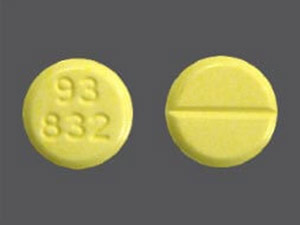
Clonazepam 0.5mg Clonazepam 0.5mg is the lowest standard strength of the immediate-release tablet formulation of clonazepam. It is a benzodiazepine prescription medicine classified as a Schedule IV controlled substance in the United States due to its risk of abuse, dependence, and withdrawal reactions. The 0.5mg tablet is described as a light orange, flat, quarter-cut tablet, …
Elisabeth Eaton
I ordered from this site for the first time and was very pleased! The process was simple, and the delivery was fast and discreet, just like they promised. The medication worked exactly as described. Will order again.
Amos Welch
This was my first time ordering, and I’m very impressed. The website was easy to navigate, and my order arrived on time, packaged discreetly. I received the medication exactly as described. Very satisfied with my purchase.
Shanna Winters
I’ve ordered from here a few times, and every time has been a great experience. Fast shipping, discreet packaging, and excellent quality. Their customer service is very responsive, and I always feel comfortable ordering. I highly recommend.